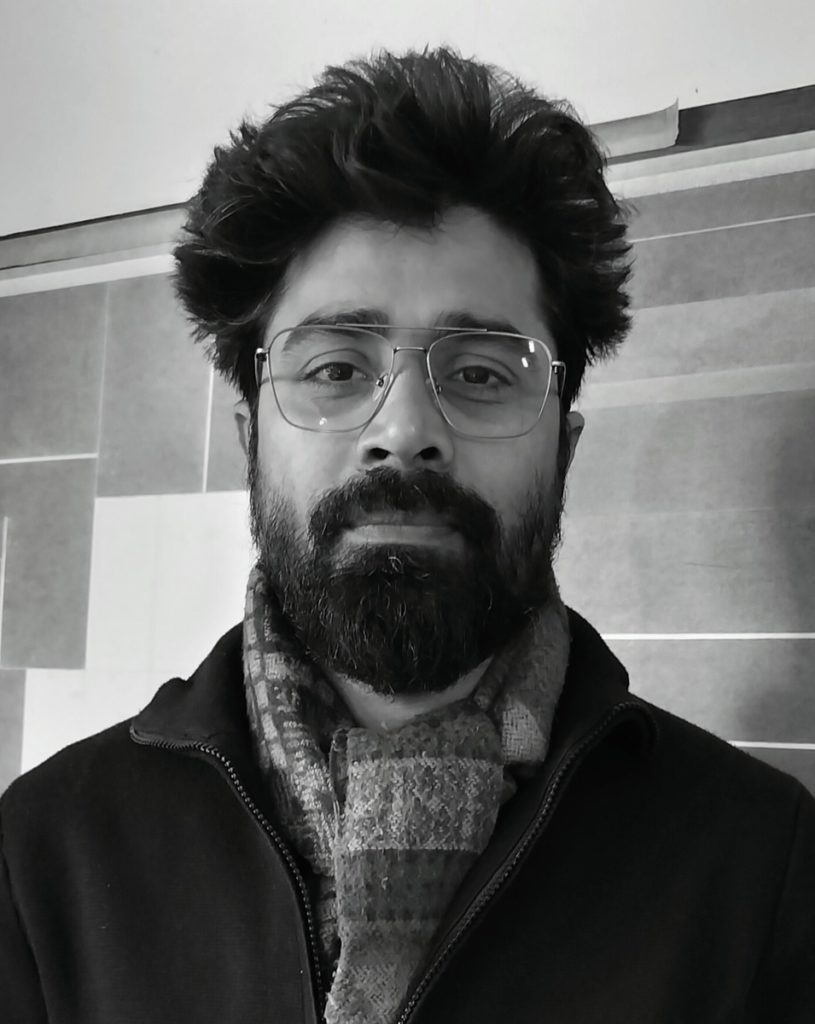
Sunil Yadav studied Painting at Allahabad University, followed by an MFA in Painting at Indira Kala Sangit Vishwavidyalaya, Khairagarh. An early engagement with textile pattern and texture left a permanent mark on his visual vocabulary. His practice explores geometry, abstraction, and spatial perception, drawing from mathematical structures and the hidden patterns embedded in everyday environments. Through layered compositions integrating maps, architectural fragments, found forms, and design-derived motifs, he constructs intricate visual systems that blur the boundaries between figuration and abstraction.
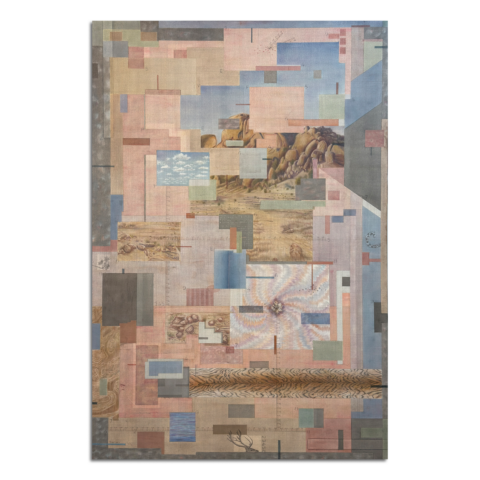
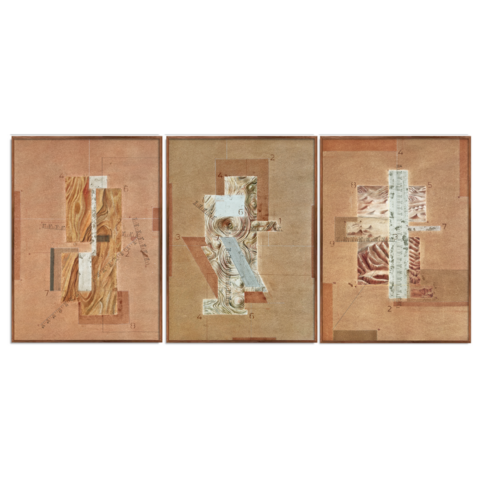
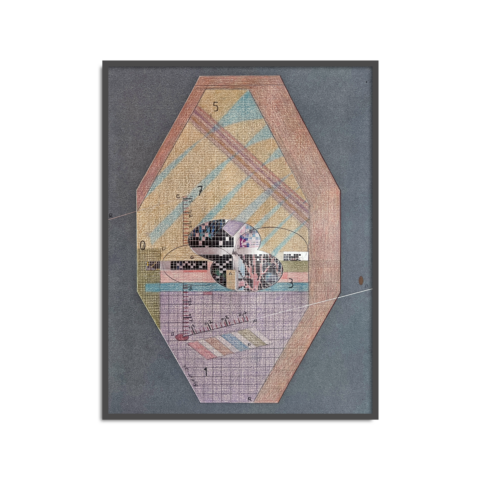
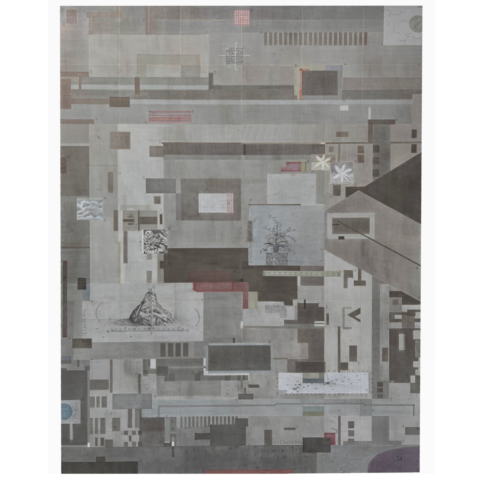
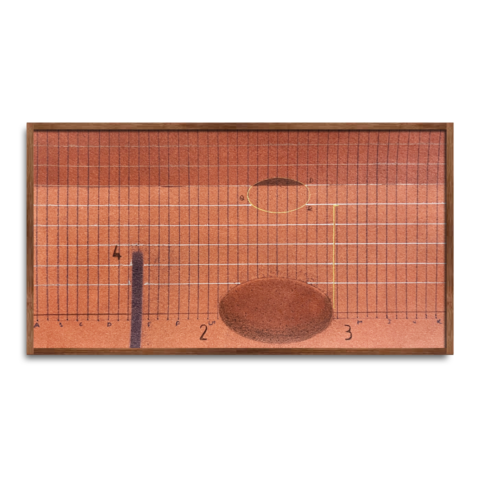
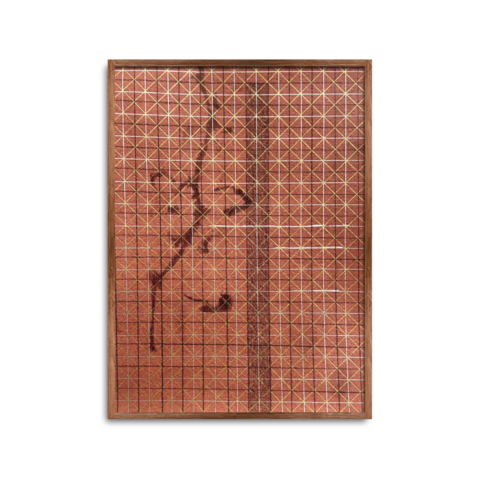
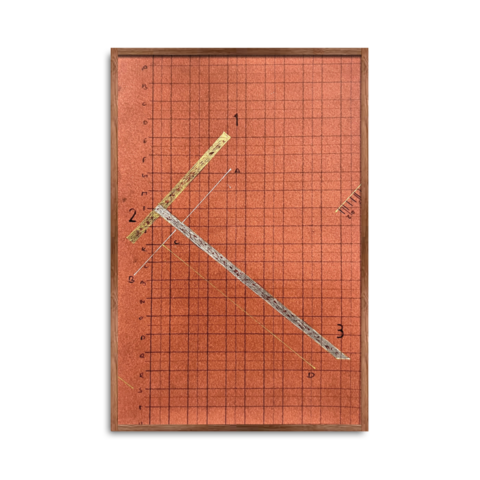
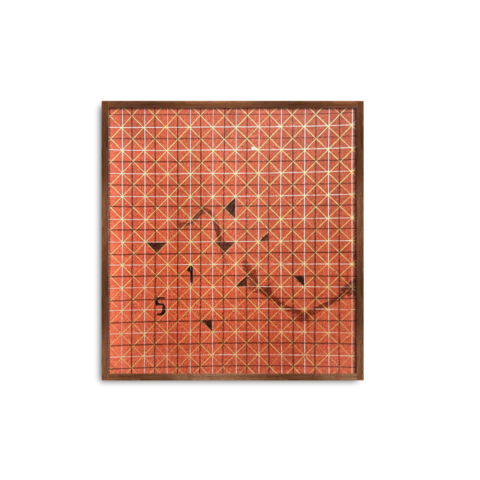
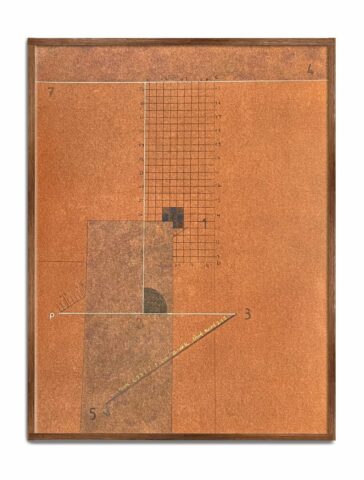
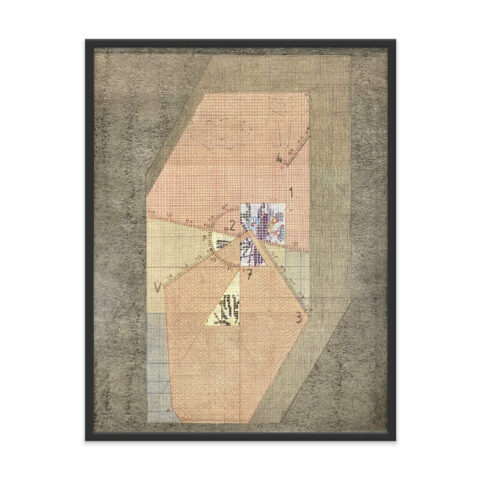
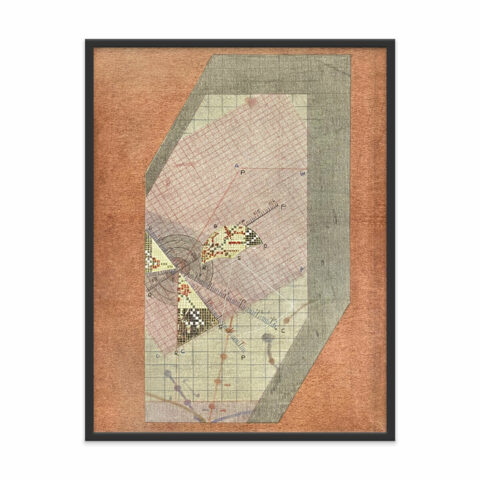
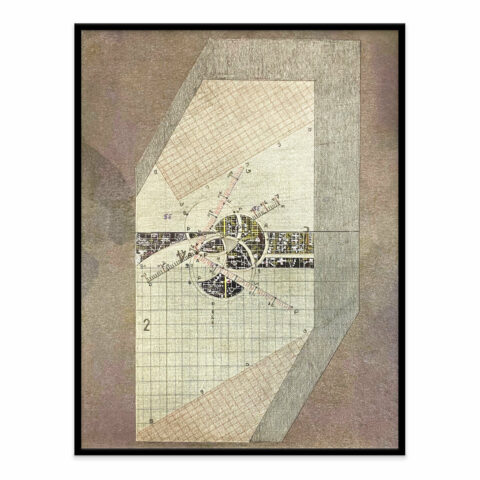
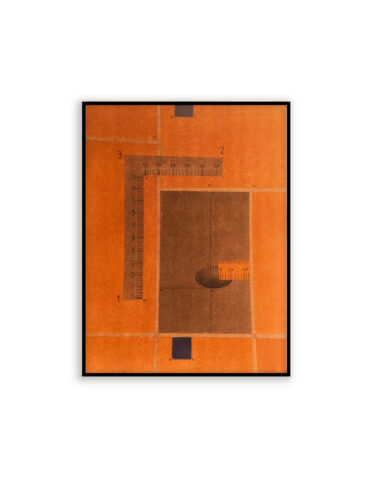
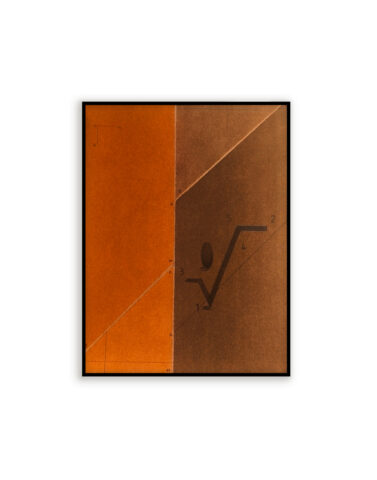
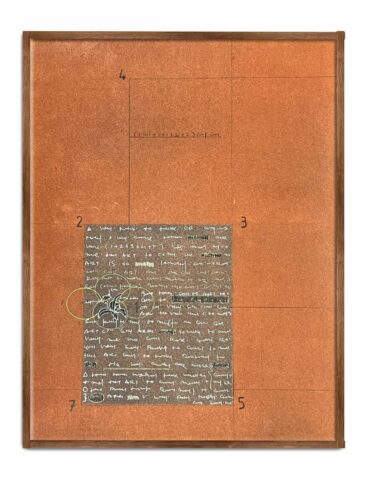
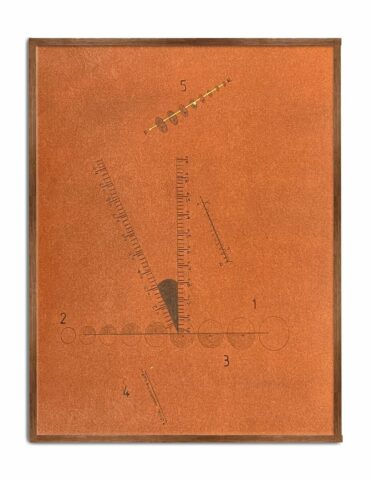
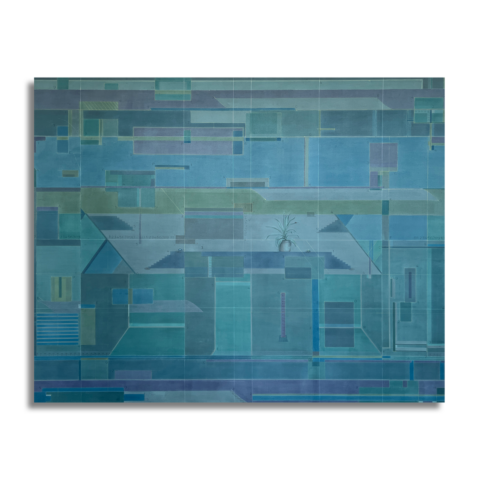
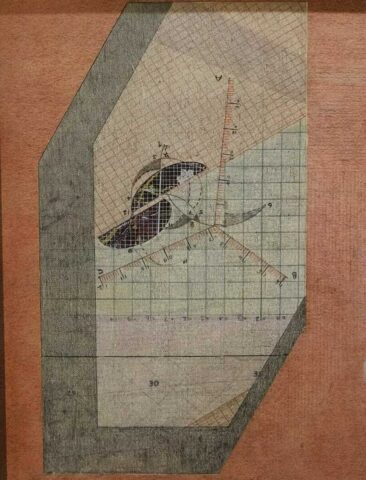
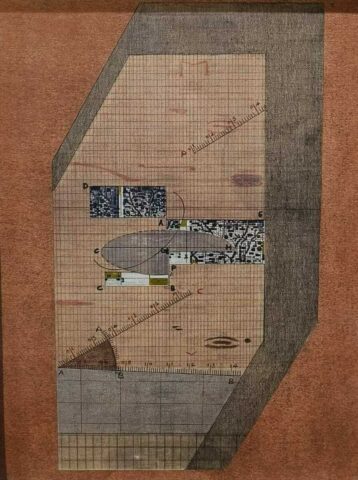
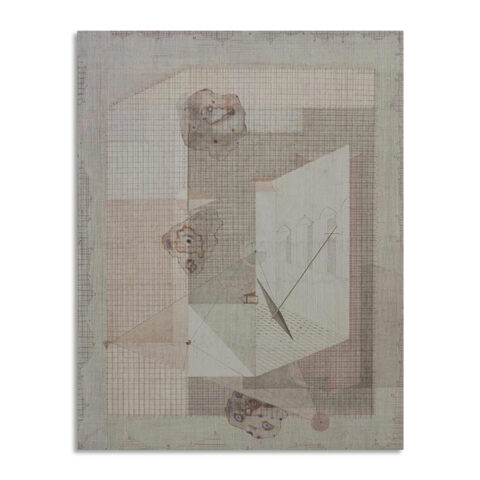
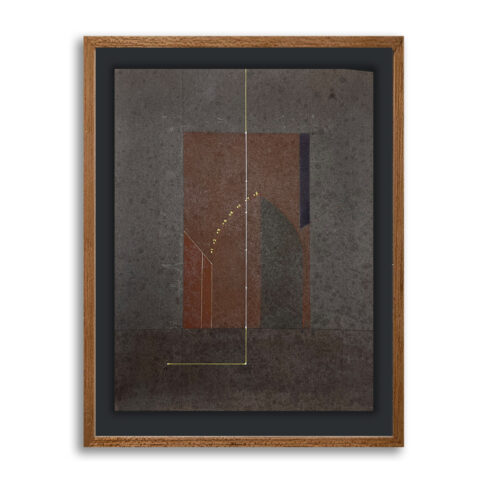
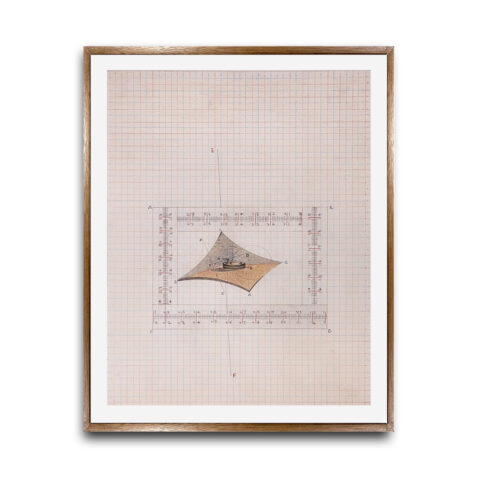
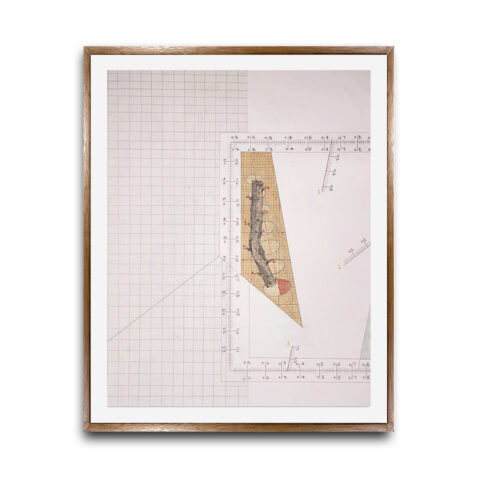
His subject is the structuralism that runs through ordinary things. The veins of a single leaf, the textures of cloth, the sinewy lines of an insect’s body, the windows and façades of old buildings, the cartographic logic of maps: all of these become entries in a geometric system he is constructing across his canvases. Graph paper, pencil grids, and measured numerical notation often sit visibly inside the picture plane, so that the act of measuring becomes part of what is shown. Geometry here is both formal language and epistemological tool, a way of uncovering unseen relationships within urban and ecological landscapes.
The conceptual scaffolding is named. Sartre on the work of art as a tool of revelation, born from imagination, disclosing realities of the world. Gombrich on “schema,” the artist seeing what he paints rather than painting what he sees. John Constable’s old insistence that painting is itself a science. The visual lineage is similarly explicit: Atul Dodiya and Jitish Kallat from the Indian contemporary canon, and Olafur Eliasson for the phenomenological geometry of perception. Outside India, the work also reads naturally alongside Anni Albers (whose textile-design origin Sunil shares), Agnes Martin, and Bridget Riley: a tradition of patient grid-based abstraction in which mathematics is subject and method at once.
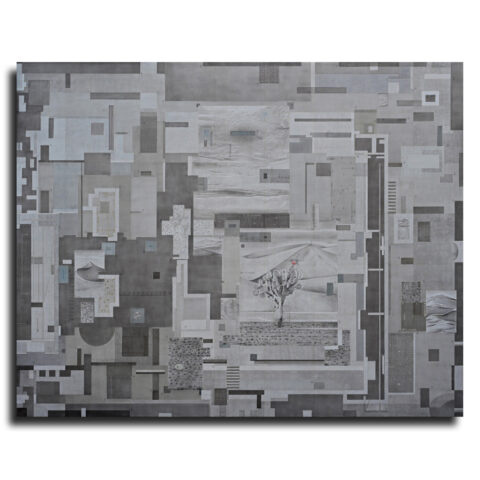
His current series, Unseen Realities, pushes this further. Geometric forms collide with highly detailed naturalistic drawing, producing compositions that read on first glance as pixelated images or digital glitches and on second glance as patient observations of how atoms, leaves, and architectural surfaces actually organise themselves. The work argues that perception is structured by patterns we do not consciously see, and that the painter’s job is to make them visible.
Selected residencies: Art in Residence, Embassy of Germany, New Delhi (juried selection). Selected awards: Confluence 18th International Art Contest, 1st Prize, 2018; Platinum Emirates Award, 2018; Platinum Award, Prafulla Dahanukar Art Foundation, Mumbai, 2017; Gold Award (Central Zone), Prafulla Dahanukar Art Foundation, 2015; All India Triennale Award, State Lalit Kala Academy, Lucknow, 2016; Kashi National Award, Banaras, 2016; UP State Award, Lalit Kala Akademi, Lucknow, 2015. Selected collections: Kumar Mangalam Birla; Raghav Jhindal; Boston Consulting Group (permanent collection); Reliance Industries; BITS School of Management; Plaksha University, Mohali; Signet Capital.

Sunil Yadav studied Painting at Allahabad University, followed by an MFA in Painting at Indira Kala Sangit Vishwavidyalaya, Khairagarh. An early engagement with textile pattern and texture left a permanent mark on his visual vocabulary. His practice explores geometry, abstraction, and spatial perception, drawing from mathematical structures and the hidden patterns embedded in everyday environments. Through layered compositions integrating maps, architectural fragments, found forms, and design-derived motifs, he constructs intricate visual systems that blur the boundaries between figuration and abstraction.
His subject is the structuralism that runs through ordinary things. The veins of a single leaf, the textures of cloth, the sinewy lines of an insect’s body, the windows and façades of old buildings, the cartographic logic of maps: all of these become entries in a geometric system he is constructing across his canvases. Graph paper, pencil grids, and measured numerical notation often sit visibly inside the picture plane, so that the act of measuring becomes part of what is shown. Geometry here is both formal language and epistemological tool, a way of uncovering unseen relationships within urban and ecological landscapes.
The conceptual scaffolding is named. Sartre on the work of art as a tool of revelation, born from imagination, disclosing realities of the world. Gombrich on “schema,” the artist seeing what he paints rather than painting what he sees. John Constable’s old insistence that painting is itself a science. The visual lineage is similarly explicit: Atul Dodiya and Jitish Kallat from the Indian contemporary canon, and Olafur Eliasson for the phenomenological geometry of perception. Outside India, the work also reads naturally alongside Anni Albers (whose textile-design origin Sunil shares), Agnes Martin, and Bridget Riley: a tradition of patient grid-based abstraction in which mathematics is subject and method at once.
His current series, Unseen Realities, pushes this further. Geometric forms collide with highly detailed naturalistic drawing, producing compositions that read on first glance as pixelated images or digital glitches and on second glance as patient observations of how atoms, leaves, and architectural surfaces actually organise themselves. The work argues that perception is structured by patterns we do not consciously see, and that the painter’s job is to make them visible.
Selected residencies: Art in Residence, Embassy of Germany, New Delhi (juried selection). Selected awards: Confluence 18th International Art Contest, 1st Prize, 2018; Platinum Emirates Award, 2018; Platinum Award, Prafulla Dahanukar Art Foundation, Mumbai, 2017; Gold Award (Central Zone), Prafulla Dahanukar Art Foundation, 2015; All India Triennale Award, State Lalit Kala Academy, Lucknow, 2016; Kashi National Award, Banaras, 2016; UP State Award, Lalit Kala Akademi, Lucknow, 2015. Selected collections: Kumar Mangalam Birla; Raghav Jhindal; Boston Consulting Group (permanent collection); Reliance Industries; BITS School of Management; Plaksha University, Mohali; Signet Capital.
Art Incept, 227 South Point Mall, Golf Course Rd, DLF Phase 5, Gurugram, Haryana 122002
S-137 Panchsheel Park, New Delhi 110017
Copyright © 2025 Art Incept