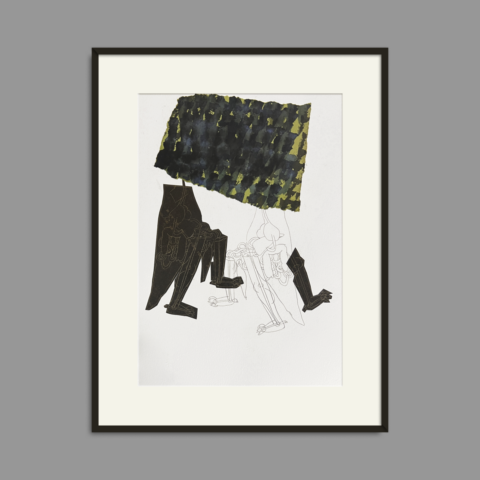
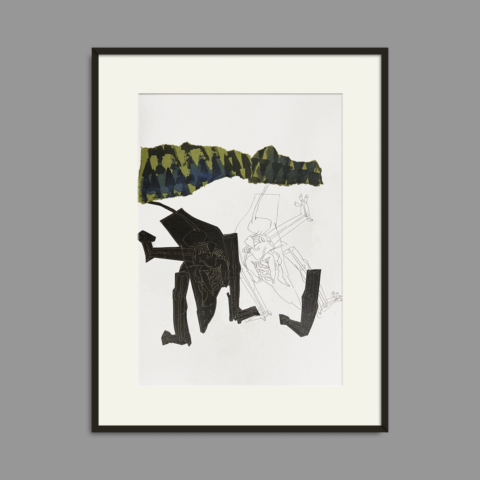
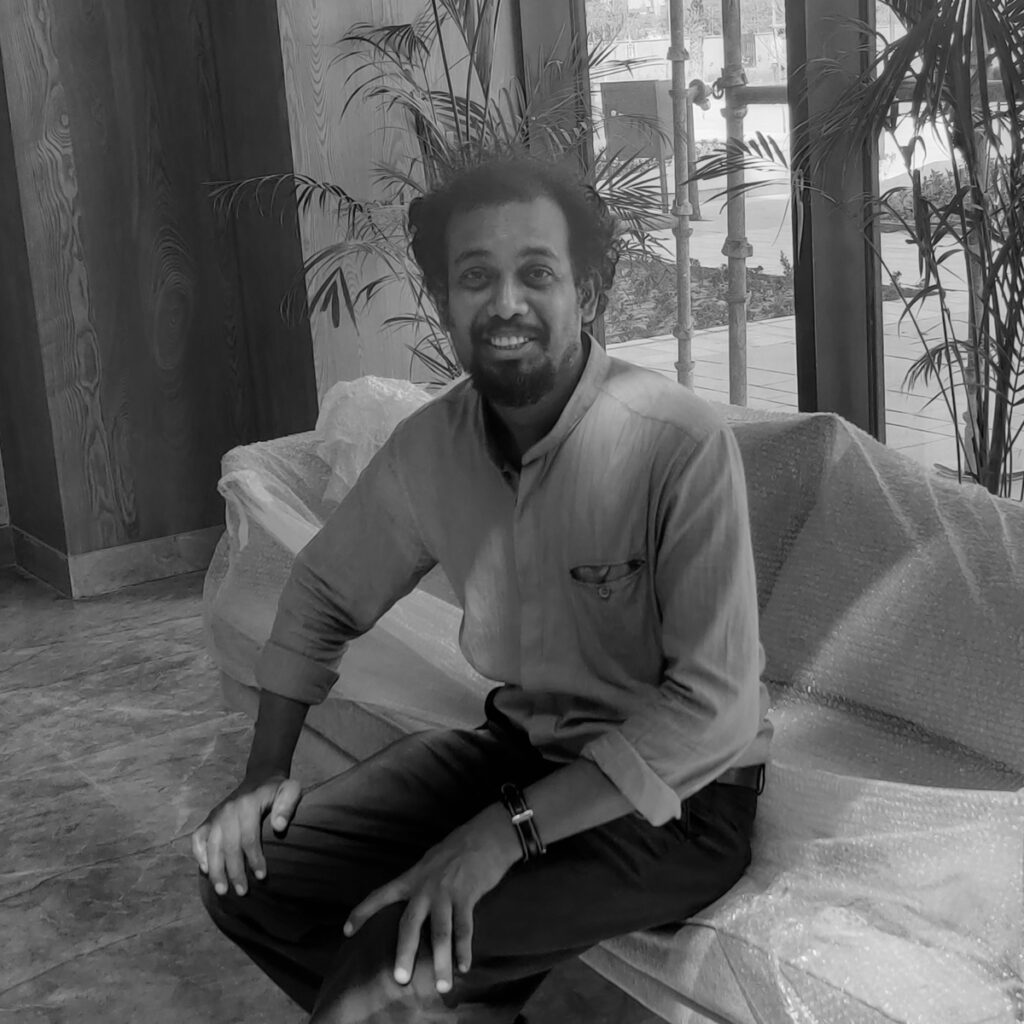
Santanu Dey studied Sculpture at the Government College of Art & Craft, Kolkata, and completed his Master’s at the Maharaja Sayajirao University of Baroda. His practice confronts environmental degradation, unchecked consumerism, and the exploitative extraction of natural resources, articulated through imagery that evokes urban dystopia and ecological unease. Working across paper, e-waste wood, aluminium lithography plates, graphite, steel pins, and the carbon black foraged from printing and photocopying machines, he constructs a monochromatic visual language that merges industrial aesthetics with architectural form.
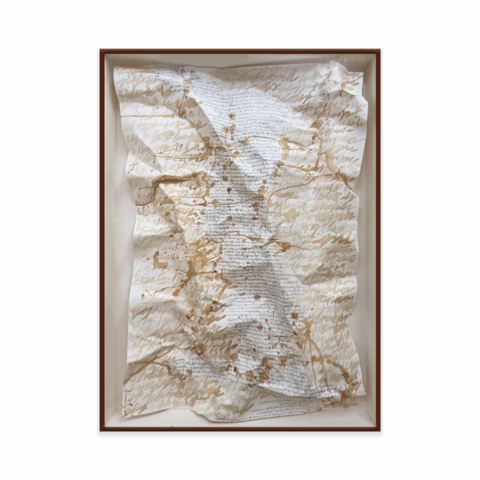
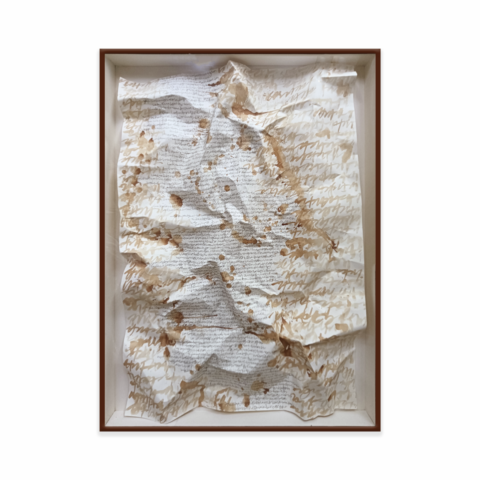
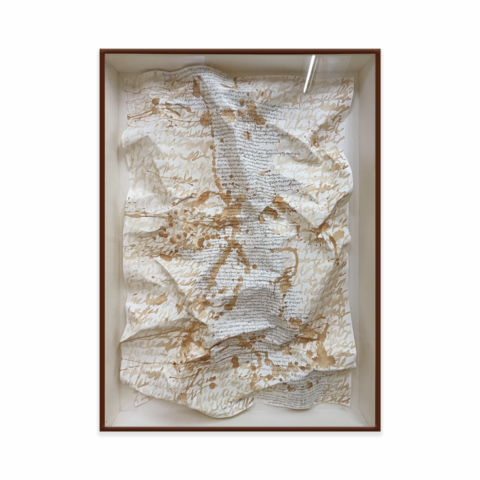
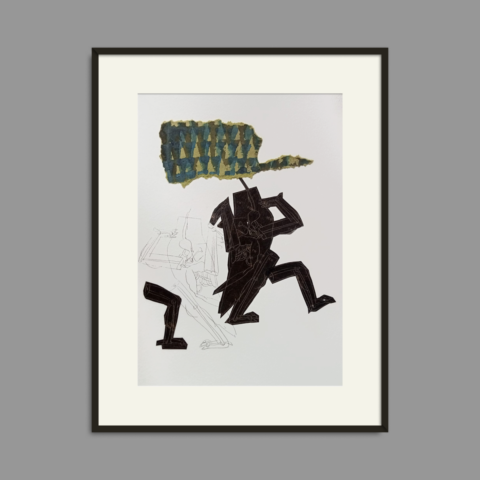
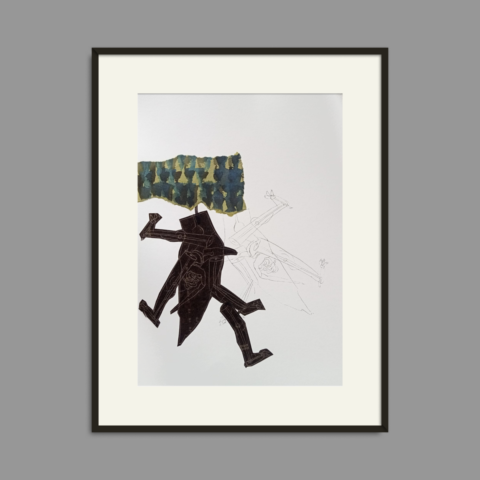
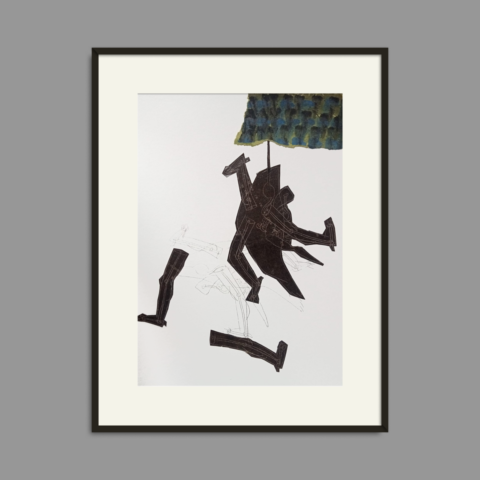
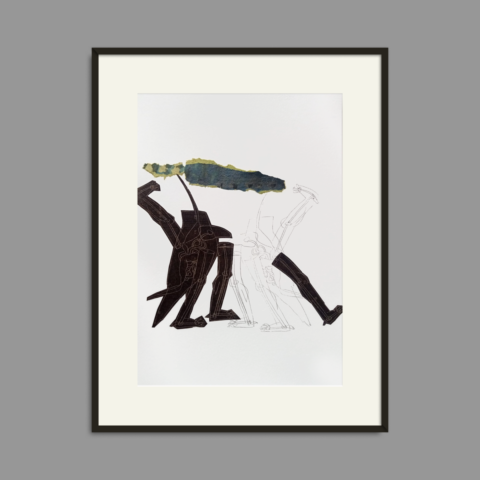
He describes himself as a triple migrant. Calcutta to Baroda to Delhi, each shift not a loss but a slow metabolisation: the city peeled, sloughed of its stereotypes, condensed into a place uniquely his own. From this trajectory comes the outsider-insider position that runs through his work, the spectator from the edges, always watching and commenting. The dhoti, increasingly absent from urban dress, returns in his recent practice as a scroll, the dhoti-scroll borrowed from the figure of the ancient sutradhar, the narrator. The artist as urban storyteller, in other words, with a self-portrait stitched into the material itself.
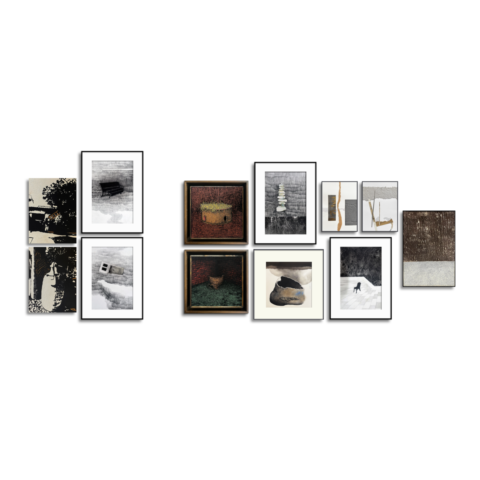
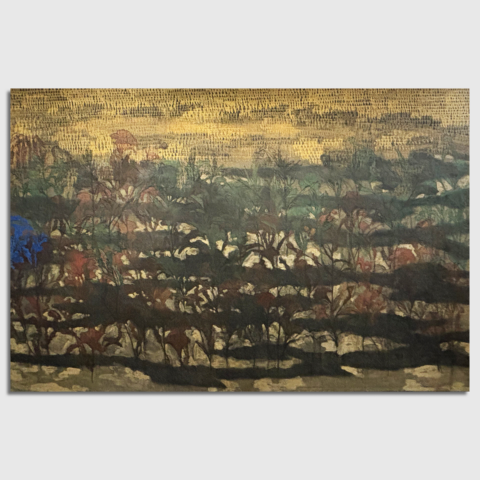
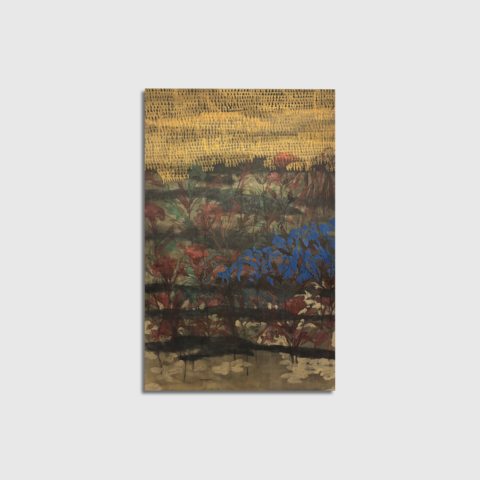
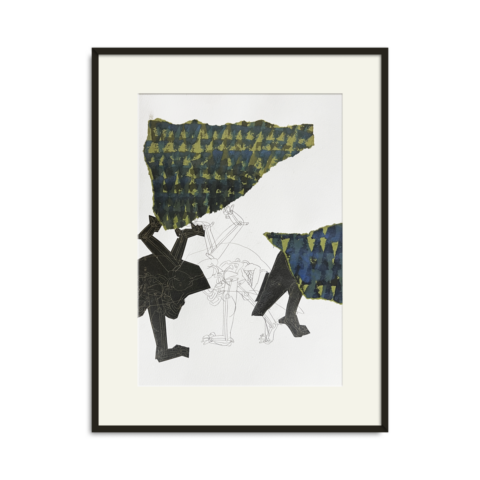
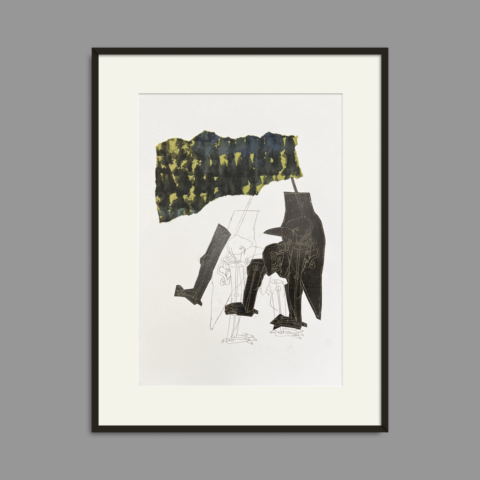
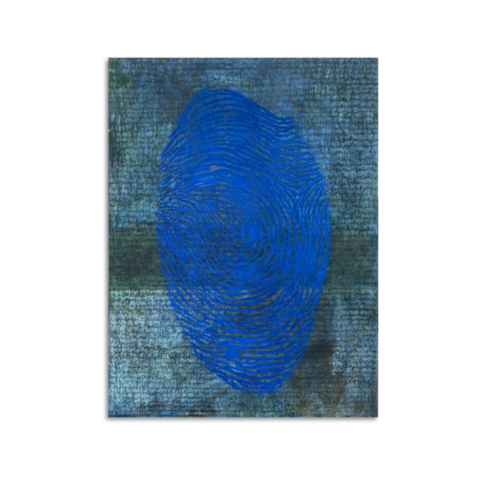
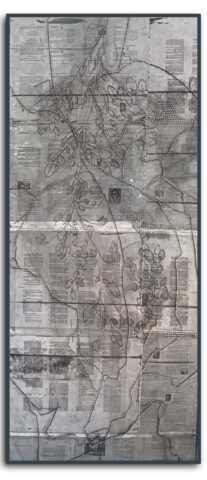
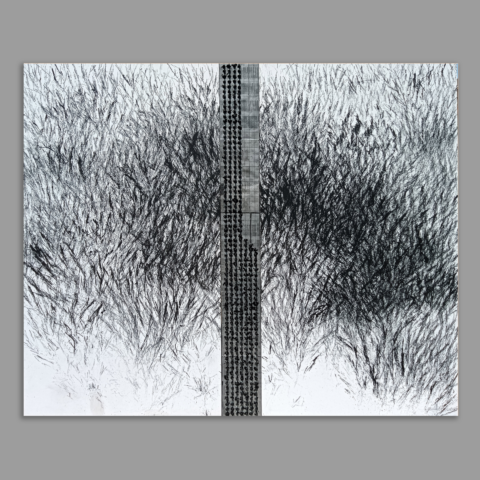
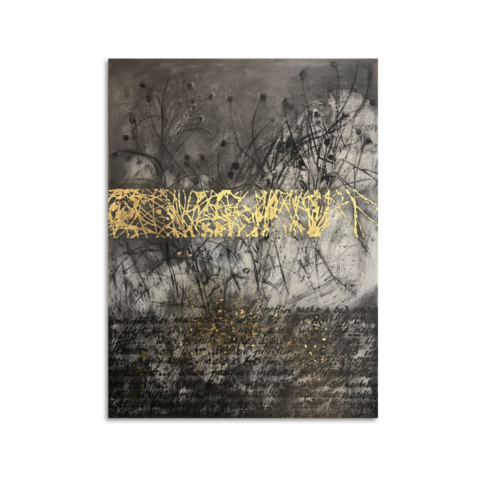
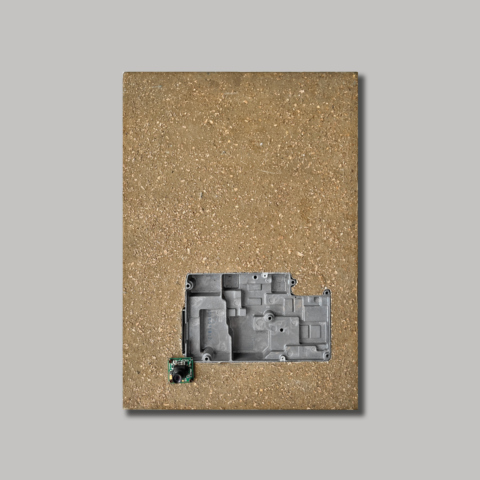
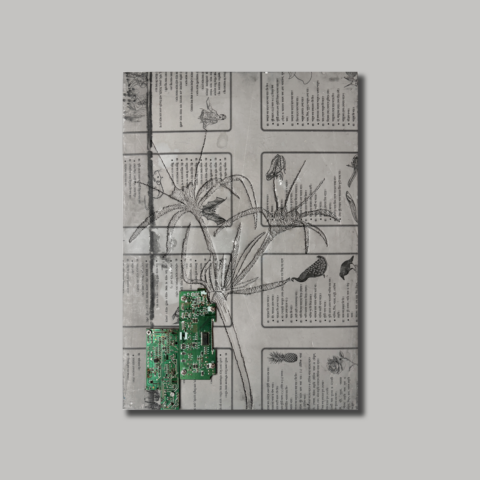
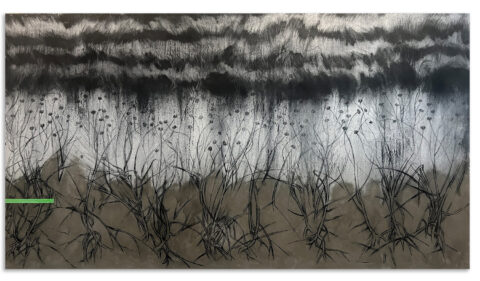
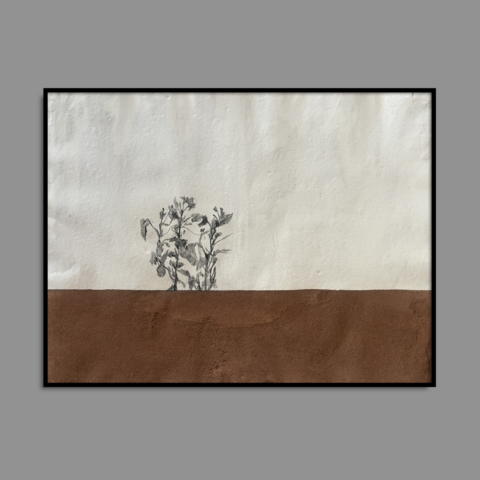
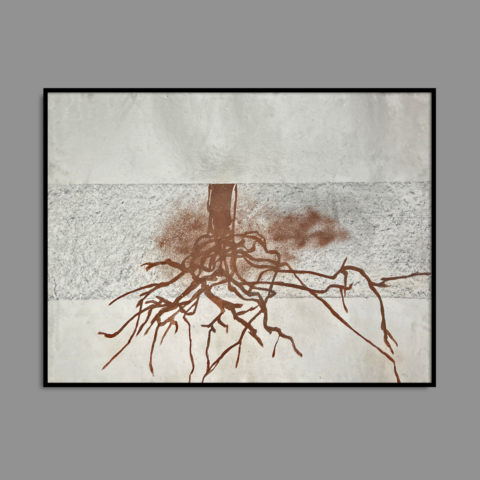
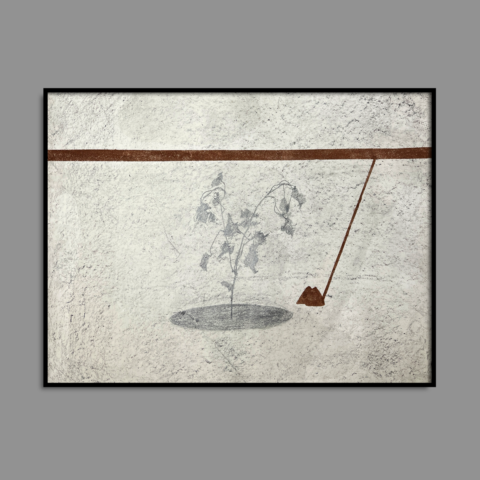
The materials carry their own argument. Santanu forages carbon black from local print and photocopy shops, asking facilities to set aside what would otherwise be discarded. What looks like charcoal in his hands is often particles of pollution given a second life inside the picture plane. Lithography plates, brick dust, twigs, nails, gold foil, and synthetic “titch” buttons (he likens them to lab diamonds) enter the same compositions, each one a fragment of evidence about how cities consume themselves. In Yamuna, what reads at first as river depths reveals itself as the city’s mangled innards in ink, foil and shimmering sludge. Earth Goddess gives the totem a cubist fragmentation, a bird with a charred pregnant belly. A falcon drawn from a Mughal miniature, sealed inside a golden enclosure, holds the work’s running argument about confinement, power, and the fleeting.
His recent solo Silent Spring (Art Incept, 2025) gives the practice its clearest framing: archive and prophecy at once, “the gilded survival within the ruins of modernity.” The borrowed Rachel Carson title is deliberate. Santanu reads almost cleanly into a lineage UK and European curators already know: the ecological-sculpture conversation that runs through El Anatsui’s transformed industrial waste, Cornelia Parker’s forensic readings of debris, and Rachel Whiteread’s monuments to absence, given a specifically Indian inflection by the materials of Yamuna’s banks and Delhi’s print shops. The work scales naturally: large-scale commissions for SAS Hotels (Madurai), BPCL, Boston Consulting Group, Hindalco, and Plaksha University all read above fifteen feet.
Recent solo: Silent Spring, Art Incept, New Delhi, 2025. Selected public art and commissions: SAS Hotels, Madurai (main reception, over 15 feet); BPCL (e-waste); Boston Consulting Group; Hindalco (aluminium); Plaksha University, Mohali; Gurugram Interactive Public Art Project, 2019. Selected residencies: Khoj International Artists’ Association, New Delhi (Peers Share, 2015); Art in Residence, Embassy of Germany, New Delhi. Selected collections: Kumar Mangalam Birla; Jindal family; Embassy of Germany, New Delhi; Boston Consulting Group; Plaksha University, Mohali; Navbharat Potteries.

Santanu Dey studied Sculpture at the Government College of Art & Craft, Kolkata, and completed his Master’s at the Maharaja Sayajirao University of Baroda. His practice confronts environmental degradation, unchecked consumerism, and the exploitative extraction of natural resources, articulated through imagery that evokes urban dystopia and ecological unease. Working across paper, e-waste wood, aluminium lithography plates, graphite, steel pins, and the carbon black foraged from printing and photocopying machines, he constructs a monochromatic visual language that merges industrial aesthetics with architectural form.
He describes himself as a triple migrant. Calcutta to Baroda to Delhi, each shift not a loss but a slow metabolisation: the city peeled, sloughed of its stereotypes, condensed into a place uniquely his own. From this trajectory comes the outsider-insider position that runs through his work, the spectator from the edges, always watching and commenting. The dhoti, increasingly absent from urban dress, returns in his recent practice as a scroll, the dhoti-scroll borrowed from the figure of the ancient sutradhar, the narrator. The artist as urban storyteller, in other words, with a self-portrait stitched into the material itself.
The materials carry their own argument. Santanu forages carbon black from local print and photocopy shops, asking facilities to set aside what would otherwise be discarded. What looks like charcoal in his hands is often particles of pollution given a second life inside the picture plane. Lithography plates, brick dust, twigs, nails, gold foil, and synthetic “titch” buttons (he likens them to lab diamonds) enter the same compositions, each one a fragment of evidence about how cities consume themselves. In Yamuna, what reads at first as river depths reveals itself as the city’s mangled innards in ink, foil and shimmering sludge. Earth Goddess gives the totem a cubist fragmentation, a bird with a charred pregnant belly. A falcon drawn from a Mughal miniature, sealed inside a golden enclosure, holds the work’s running argument about confinement, power, and the fleeting.
His recent solo Silent Spring (Art Incept, 2025) gives the practice its clearest framing: archive and prophecy at once, “the gilded survival within the ruins of modernity.” The borrowed Rachel Carson title is deliberate. Santanu reads almost cleanly into a lineage UK and European curators already know: the ecological-sculpture conversation that runs through El Anatsui’s transformed industrial waste, Cornelia Parker’s forensic readings of debris, and Rachel Whiteread’s monuments to absence, given a specifically Indian inflection by the materials of Yamuna’s banks and Delhi’s print shops. The work scales naturally: large-scale commissions for SAS Hotels (Madurai), BPCL, Boston Consulting Group, Hindalco, and Plaksha University all read above fifteen feet.
Recent solo: Silent Spring, Art Incept, New Delhi, 2025. Selected public art and commissions: SAS Hotels, Madurai (main reception, over 15 feet); BPCL (e-waste); Boston Consulting Group; Hindalco (aluminium); Plaksha University, Mohali; Gurugram Interactive Public Art Project, 2019. Selected residencies: Khoj International Artists’ Association, New Delhi (Peers Share, 2015); Art in Residence, Embassy of Germany, New Delhi. Selected collections: Kumar Mangalam Birla; Jindal family; Embassy of Germany, New Delhi; Boston Consulting Group; Plaksha University, Mohali; Navbharat Potteries.
Art Incept, 227 South Point Mall, Golf Course Rd, DLF Phase 5, Gurugram, Haryana 122002
S-137 Panchsheel Park, New Delhi 110017
Copyright © 2025 Art Incept