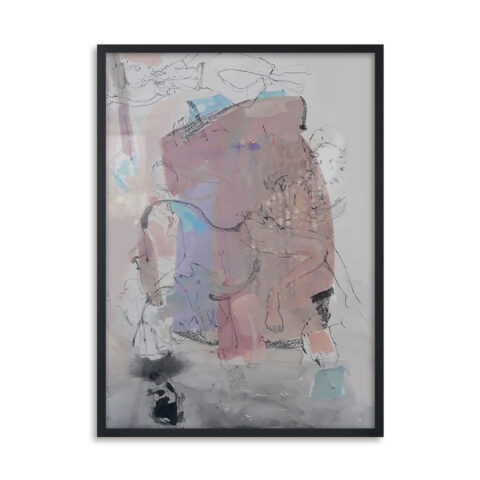
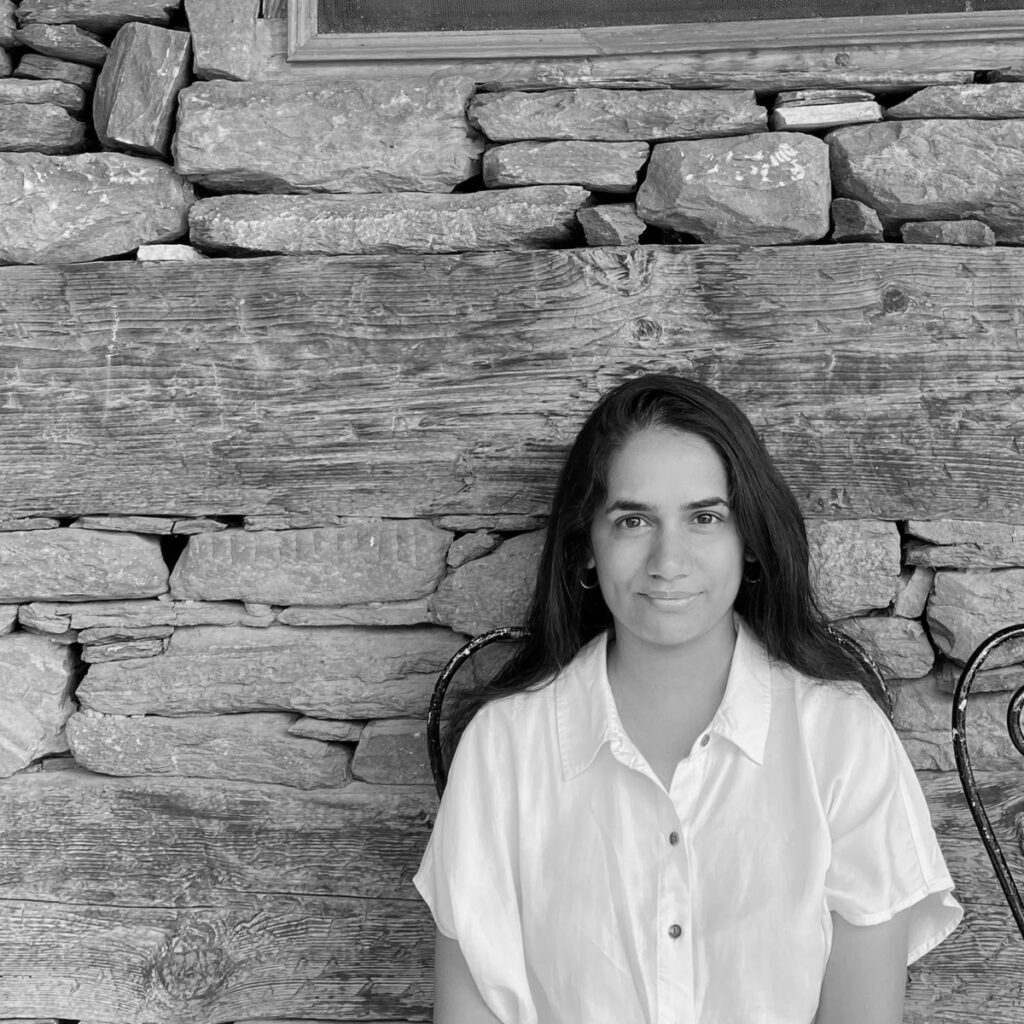
Rinku Choudhary studied Painting at the College of Art, New Delhi, where she also completed her MFA in 2018. Her work reflects the quiet repetition of emotions and thoughts that shape everyday life, drawn from common household scenes in which the environment of the home becomes both subject and metaphor. Working principally on canvas and paper with layered mediums that build and disrupt surfaces, she constructs environments that hold the unspoken dynamics of domestic interiors rather than illustrating them.
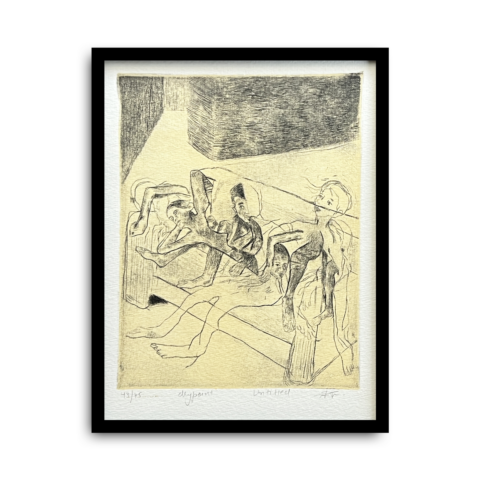
Her paintings do not directly address social issues, yet they reveal the subtle tensions and silences that reside within domestic spaces, most clearly in the recurring presence of male and female bodies kept in separate compositions. The form mirrors a structural argument: about identity, dominance, emotional suppression, and the particular invisibility of a woman’s inner world. Growing up in a large joint family where she was not permitted to explore the world after dusk, an imposition granted on the grounds of her gender, Rinku turned her family members into the subjects of her visual inquiries, and the household into the laboratory.
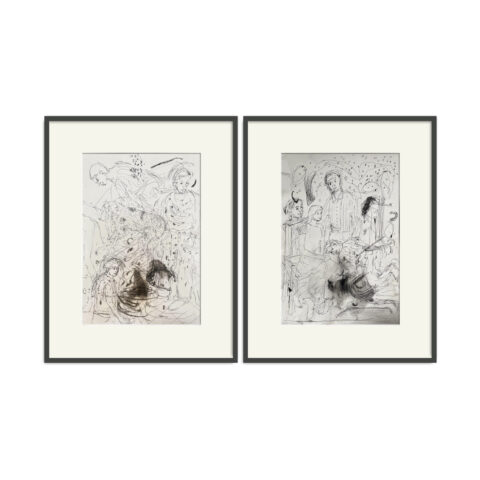
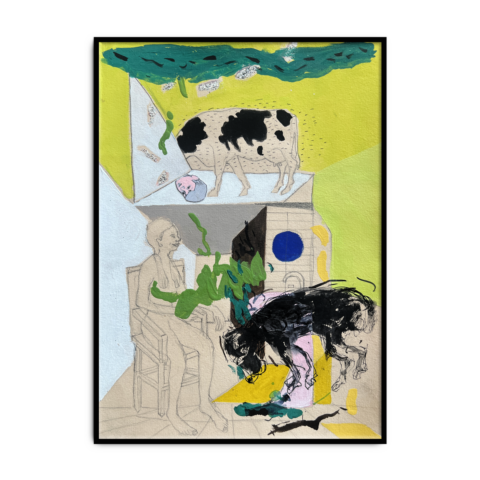
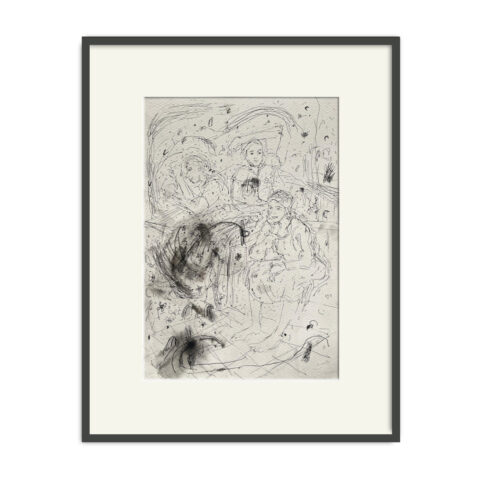
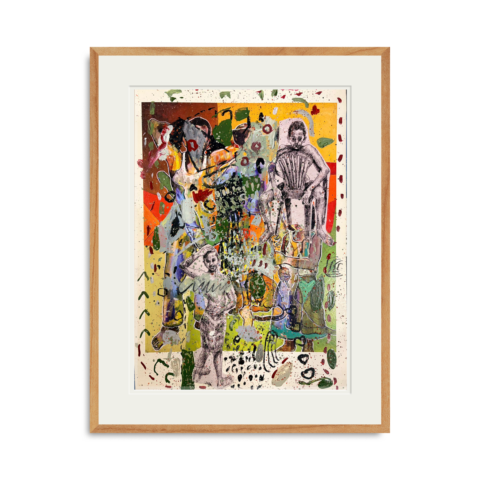
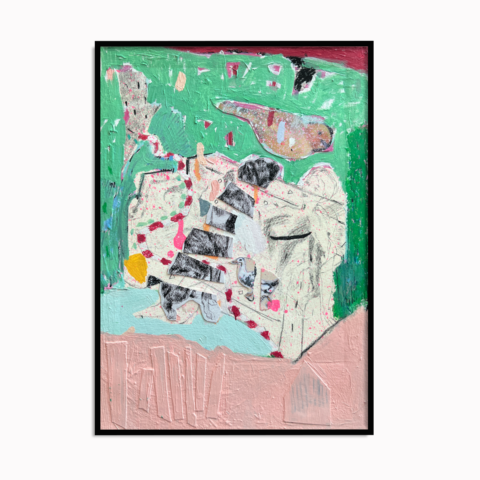
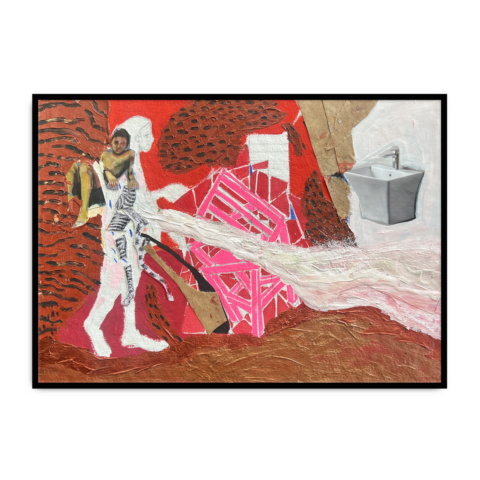
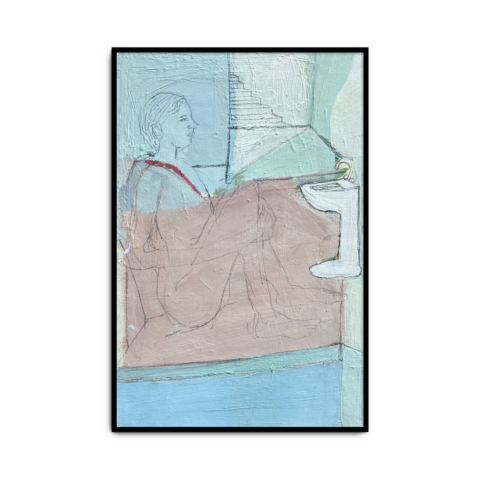
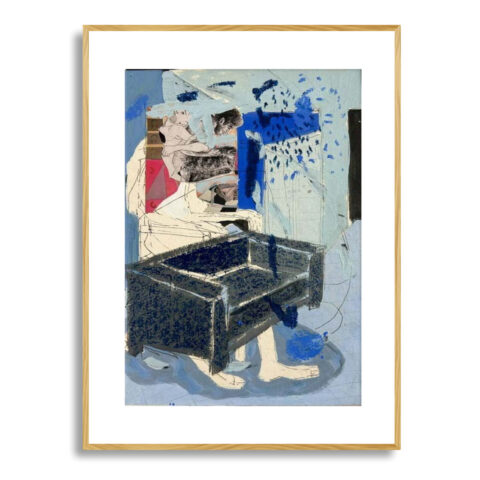
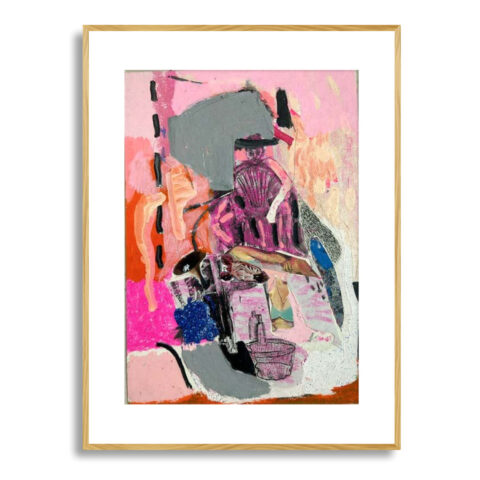
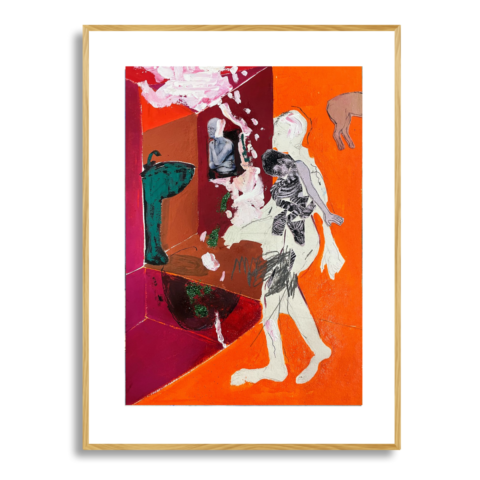
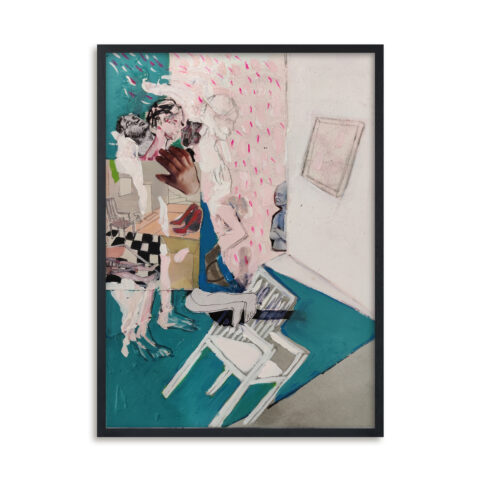
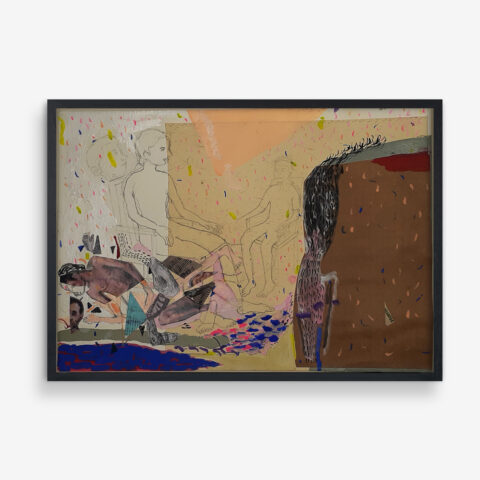
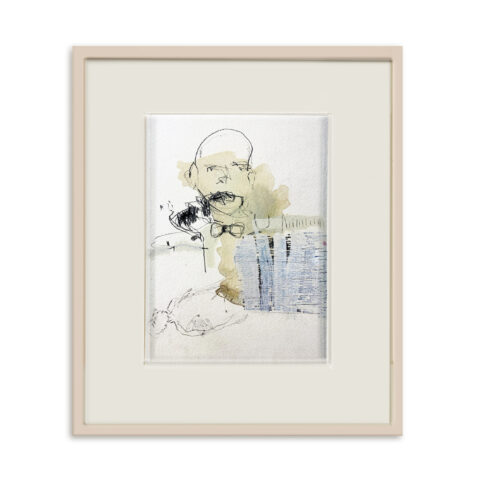
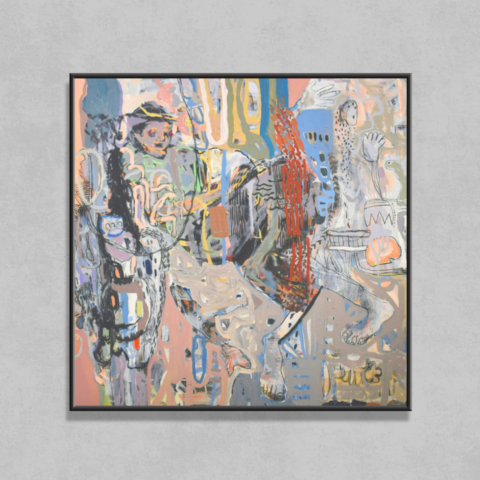
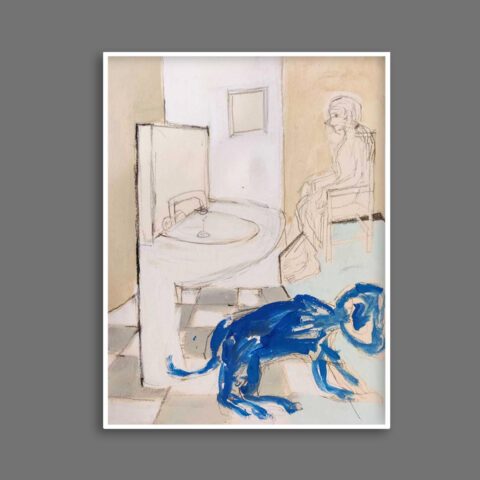
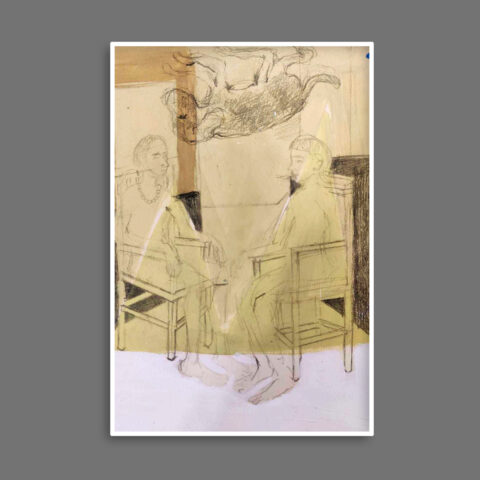
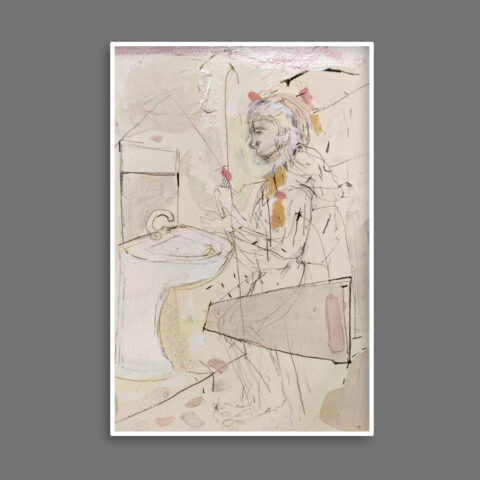
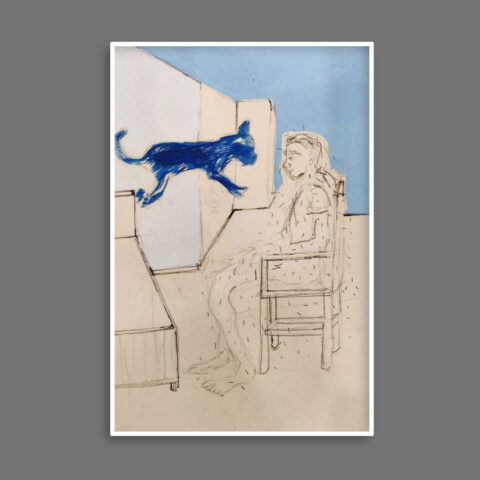
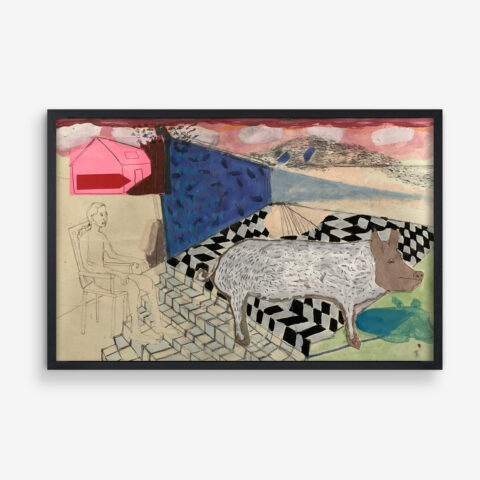
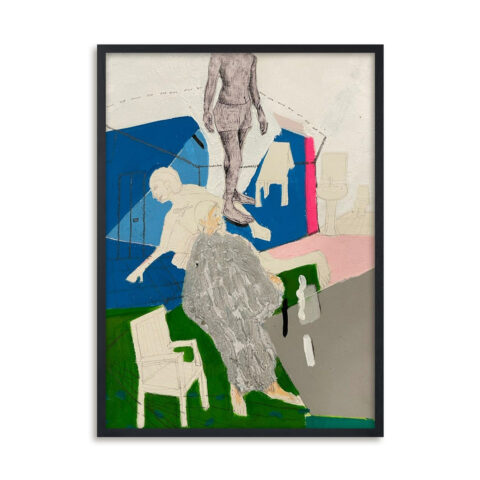
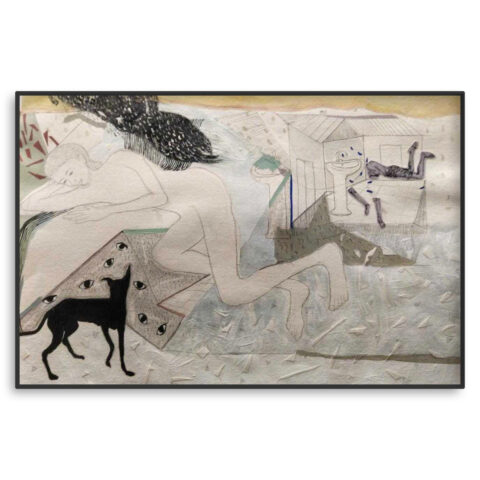
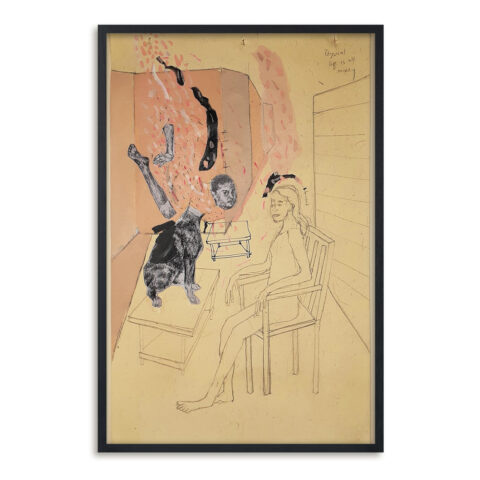
The conceptual scaffolding is borrowed from D.W. Winnicott, the British psychoanalyst, whose distinction between the “true self” and the “false self” runs cleanly through her practice. “The spontaneous gesture,” Winnicott wrote, “is the True Self in action.” Rinku’s overlapping figures, her repeating motif of a woman seated haphazardly on a chair, her confetti-like bursts of mark that hover in mid-air like the residue of unspoken thought: these are the spontaneous gestures of an interior self that the domestic structure has trained to keep quiet. The visual lineage runs through Mary Cassatt’s female-gaze interiors and Arpita Singh’s folkloric figurations on one hand, and through Klee, Kandinsky, and Tyeb Mehta’s cubist colour-as-mood register on the other. Birds from her childhood terrace in Delhi-6, and a dog who outlived its life into her memory, return as totems through the work.
The pandemic sharpened the inquiry. With home suddenly a site of forced enquiry, Rinku began to notice the unchanged routines of the women around her, the wives and mothers and caregivers whose emotional labour had become newly visible to everyone else but had always been visible to her. For an exhibition gathered around craft as contemporary language, Rinku brings the most interior register: a feminism that the work proves rather than declares.
Selected institutional and biennale exhibitions: India Art, Architecture & Design Biennale, Red Fort, New Delhi, 2023; Group Exhibition, MOMUS Museum of Contemporary Art, Thessaloniki, 2022; Selected Exhibition, MOMUS Museum of Contemporary Art, Thessaloniki, 2019; Exhibition with Total Arts Gallery, Dubai International Financial Centre, 2018. Selected awards and grants: Shrishti Art Grant (AIF), 2020; Delhi State Award, Prafulla Dahanukar Art Foundation, 2018; Women Artist Award, Prafulla Dahanukar Art Foundation, 2017; selected for the 62nd National Exhibition, Lalit Kala Akademi, 2020–21. Selected programmes and residencies: Sold Out Young Collectors Programme, India Art Fair Parallel, 2024; 1Shantiroad Extended Residency Programme, Bengaluru, 2022; India–Korea Cultural Exchange (Hyundai), 2017. Selected collections: Kumar Mangalam Birla; Sidharth Somaiya; G.R. Iranna; MOMUS Museum of Contemporary Art, Thessaloniki; Boston Consulting Group; Sunmax Collections; All India Fine Arts and Crafts Society.

Rinku Choudhary studied Painting at the College of Art, New Delhi, where she also completed her MFA in 2018. Her work reflects the quiet repetition of emotions and thoughts that shape everyday life, drawn from common household scenes in which the environment of the home becomes both subject and metaphor. Working principally on canvas and paper with layered mediums that build and disrupt surfaces, she constructs environments that hold the unspoken dynamics of domestic interiors rather than illustrating them.
Her paintings do not directly address social issues, yet they reveal the subtle tensions and silences that reside within domestic spaces, most clearly in the recurring presence of male and female bodies kept in separate compositions. The form mirrors a structural argument: about identity, dominance, emotional suppression, and the particular invisibility of a woman’s inner world. Growing up in a large joint family where she was not permitted to explore the world after dusk, an imposition granted on the grounds of her gender, Rinku turned her family members into the subjects of her visual inquiries, and the household into the laboratory.
The conceptual scaffolding is borrowed from D.W. Winnicott, the British psychoanalyst, whose distinction between the “true self” and the “false self” runs cleanly through her practice. “The spontaneous gesture,” Winnicott wrote, “is the True Self in action.” Rinku’s overlapping figures, her repeating motif of a woman seated haphazardly on a chair, her confetti-like bursts of mark that hover in mid-air like the residue of unspoken thought: these are the spontaneous gestures of an interior self that the domestic structure has trained to keep quiet. The visual lineage runs through Mary Cassatt’s female-gaze interiors and Arpita Singh’s folkloric figurations on one hand, and through Klee, Kandinsky, and Tyeb Mehta’s cubist colour-as-mood register on the other. Birds from her childhood terrace in Delhi-6, and a dog who outlived its life into her memory, return as totems through the work.
The pandemic sharpened the inquiry. With home suddenly a site of forced enquiry, Rinku began to notice the unchanged routines of the women around her, the wives and mothers and caregivers whose emotional labour had become newly visible to everyone else but had always been visible to her. For an exhibition gathered around craft as contemporary language, Rinku brings the most interior register: a feminism that the work proves rather than declares.
Selected institutional and biennale exhibitions: India Art, Architecture & Design Biennale, Red Fort, New Delhi, 2023; Group Exhibition, MOMUS Museum of Contemporary Art, Thessaloniki, 2022; Selected Exhibition, MOMUS Museum of Contemporary Art, Thessaloniki, 2019; Exhibition with Total Arts Gallery, Dubai International Financial Centre, 2018. Selected awards and grants: Shrishti Art Grant (AIF), 2020; Delhi State Award, Prafulla Dahanukar Art Foundation, 2018; Women Artist Award, Prafulla Dahanukar Art Foundation, 2017; selected for the 62nd National Exhibition, Lalit Kala Akademi, 2020–21. Selected programmes and residencies: Sold Out Young Collectors Programme, India Art Fair Parallel, 2024; 1Shantiroad Extended Residency Programme, Bengaluru, 2022; India–Korea Cultural Exchange (Hyundai), 2017. Selected collections: Kumar Mangalam Birla; Sidharth Somaiya; G.R. Iranna; MOMUS Museum of Contemporary Art, Thessaloniki; Boston Consulting Group; Sunmax Collections; All India Fine Arts and Crafts Society.
Art Incept, 227 South Point Mall, Golf Course Rd, DLF Phase 5, Gurugram, Haryana 122002
S-137 Panchsheel Park, New Delhi 110017
Copyright © 2025 Art Incept