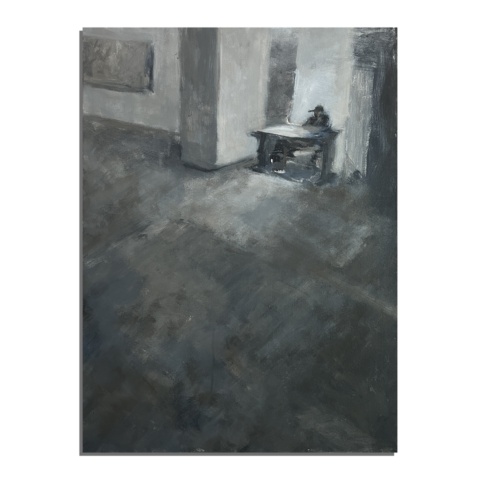
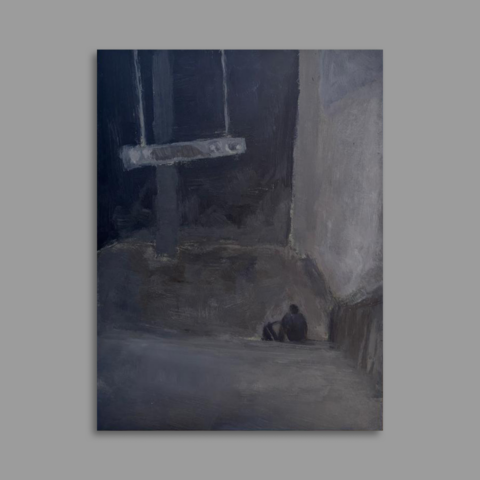
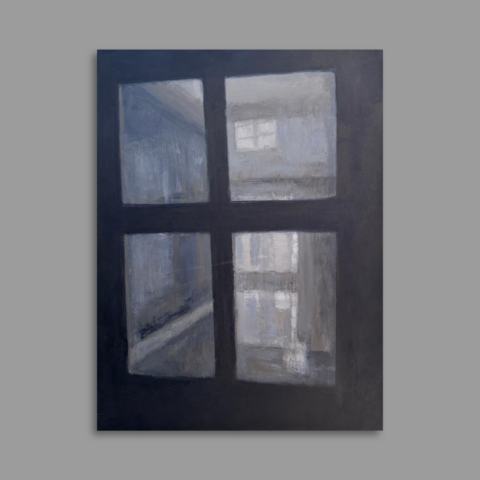
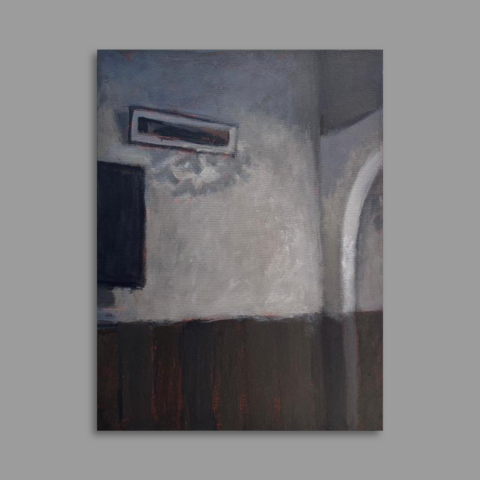
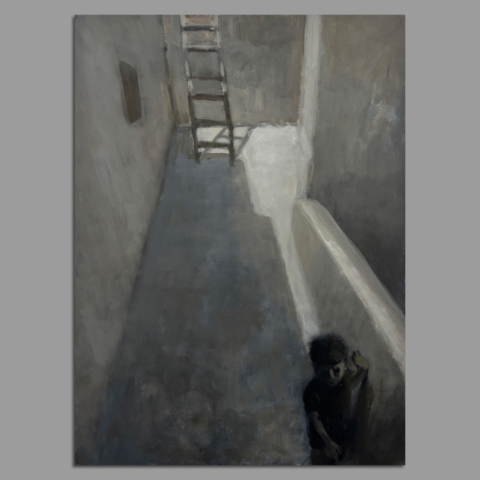
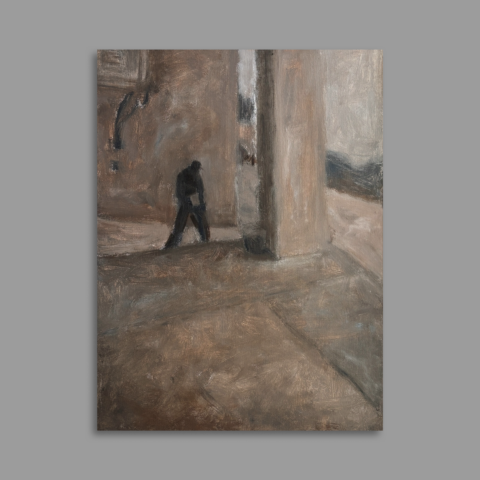
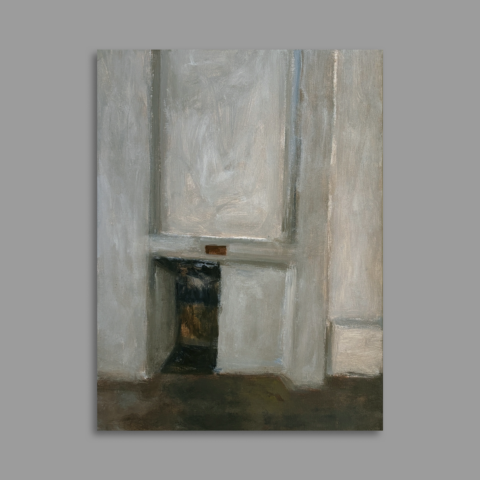
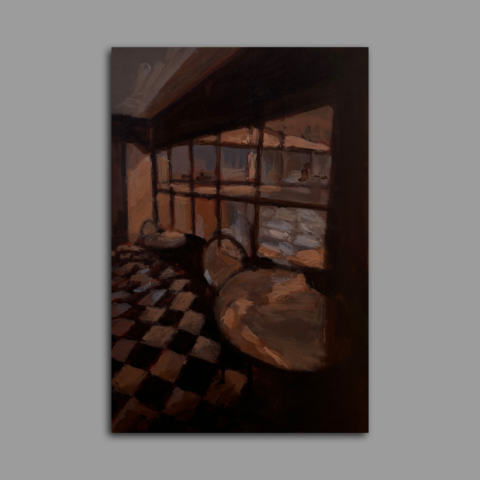
Rajat Kumar took a longer route to painting than most. He completed a BTech in Computer Science at Amity University, Noida, in 2011 and worked in the tech industry for a few years before answering what he calls his inner calling. A BFA followed at the Delhi College of Art (2017), and an MFA at Subharti University, Meerut (2020). His paintings emerge from self-compiled photo journals that document the overlooked interiors and transitional spaces of city life: an empty corridor, a familiar room, the slow turn of light across a wall at the end of a workday. Rather than narrate the urban, Rajat attends to its emotional atmosphere.
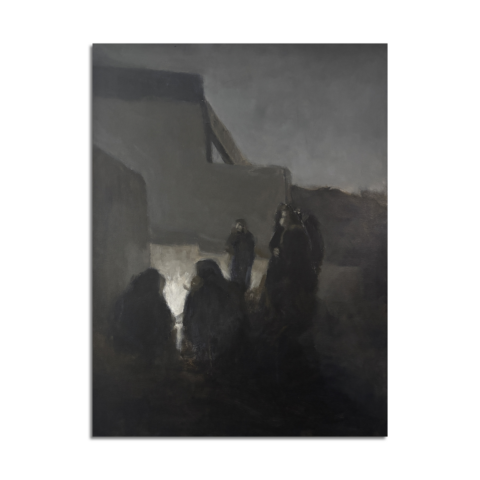
His method begins in observation. He photographs the moments around him in Delhi, in his family home in Meerut, in the corners of buildings most people pass without seeing. The photographs become the source images for paintings he builds with brushes, rollers, and scrapers on canvas, board, and paper. The early training drew on the Romantics, especially J.M.W. Turner’s atmospheric brushwork, and on Rembrandt’s chiaroscuro, the play of light and dark on which any quiet interior depends. From these came his attention to the painted surface as a vehicle for mood rather than incident.
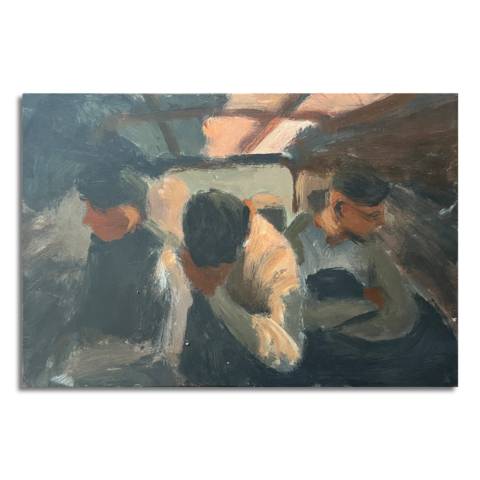
The pandemic sharpened the practice. Forced into deep observation of his own domestic space, Rajat began producing the small-scale City Series on acid-free paper, intimate watercolour-scale studies of a city stripped to its interiors. The visual lineage he claims here is explicit and travels well into western reading: Edward Hopper for the emptiness, the held quiet of a room that someone has just left; David Hockney for the bright domestic palette and the conviction that the painted interior is a serious subject; Francis Bacon and Lucian Freud for the unsentimental attention to the figure inside the room. The melancholy is real but never overworked. Each painting reads as a page from a journal he keeps open to anyone who looks.
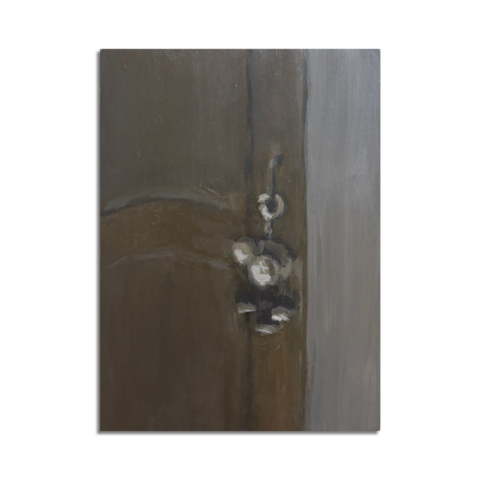
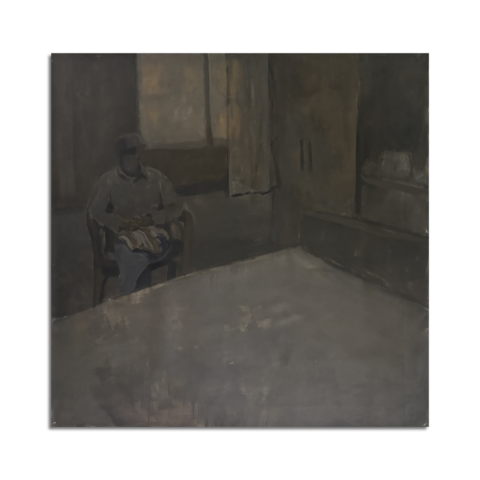
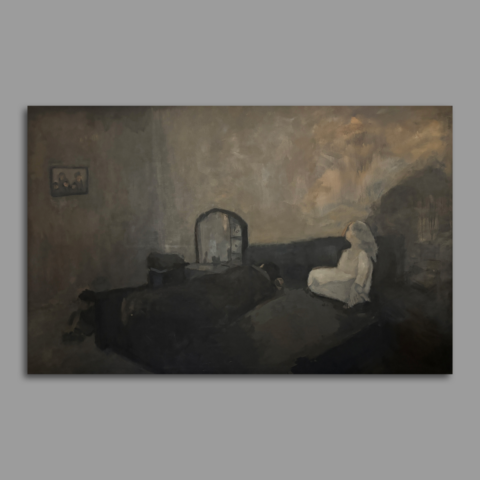
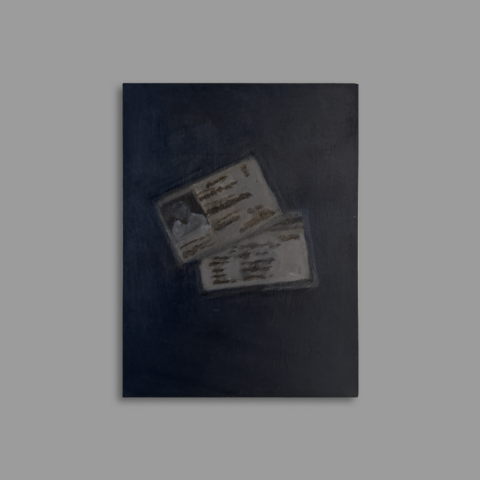
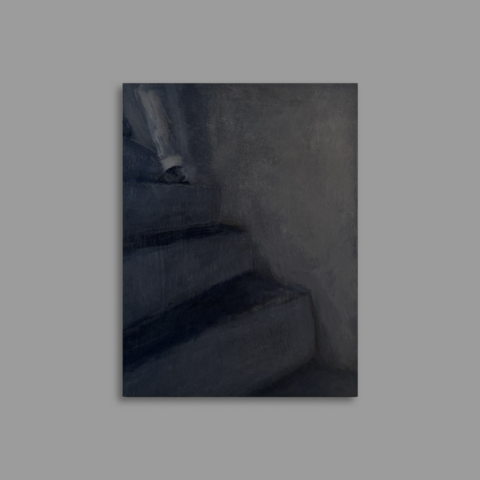
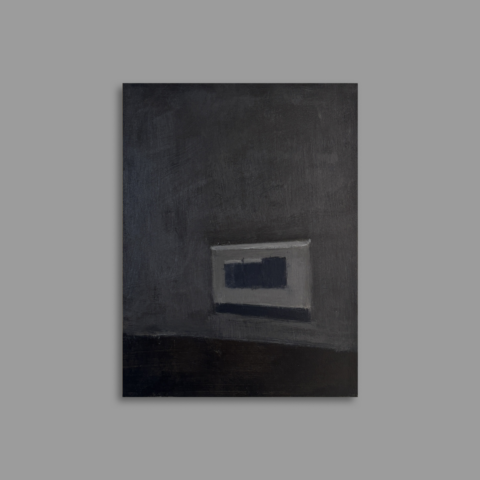
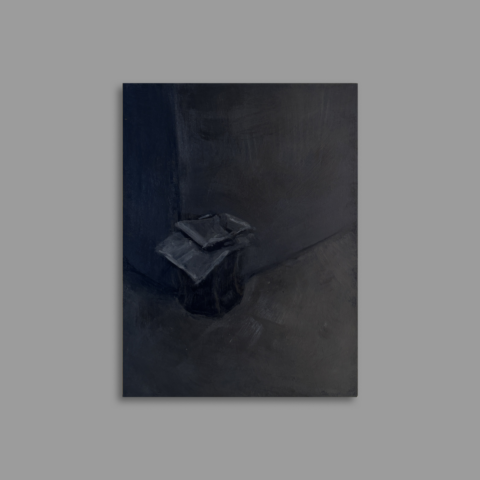
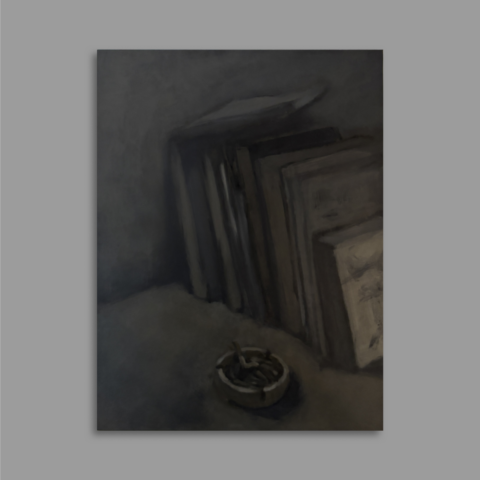
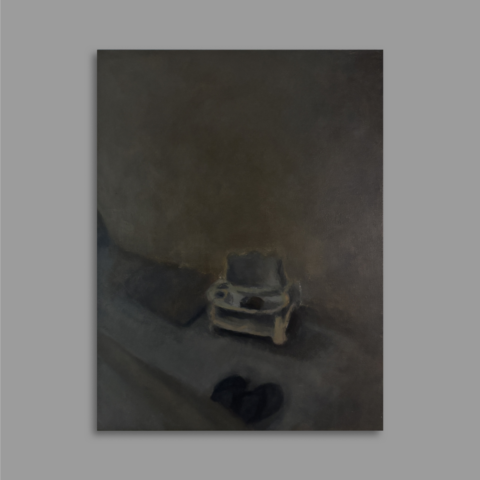
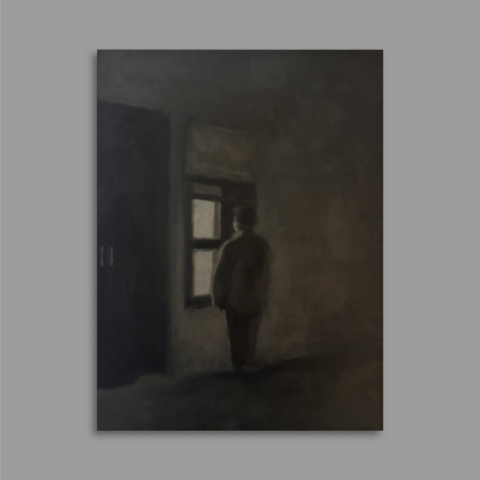
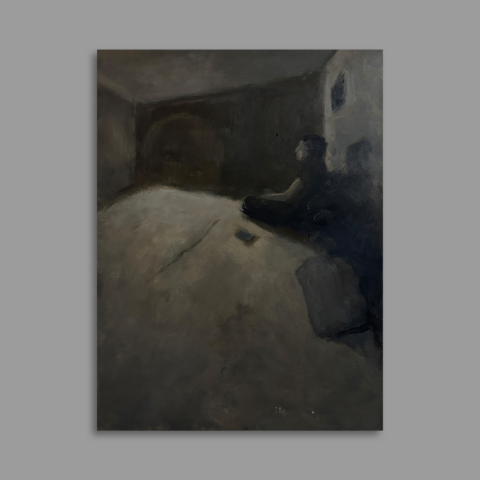
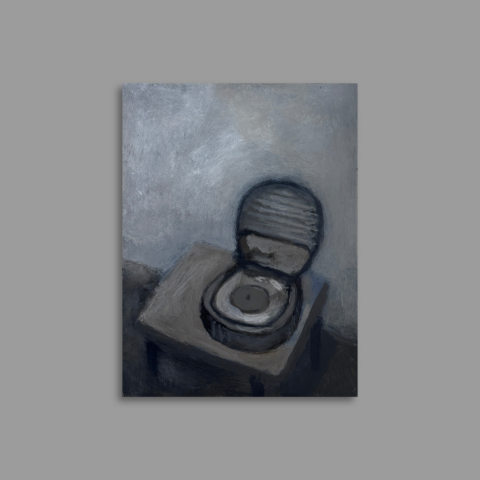
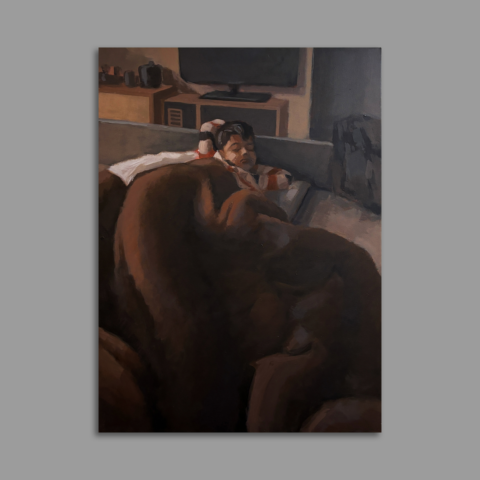
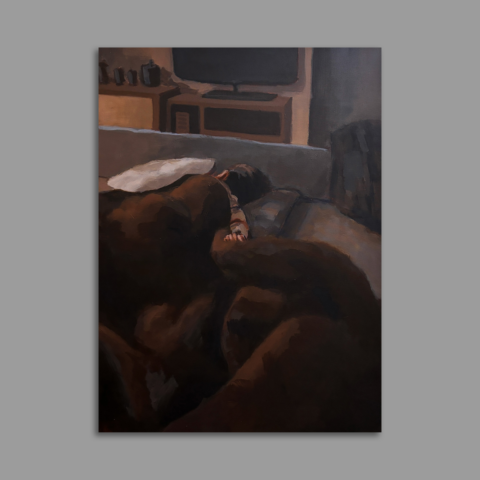
His most recent series turns the practice toward loss. “This series deals with the experience of losing someone whose absence makes you question who you are,” he writes. “What once felt warm or full of meaning suddenly becomes distant, quiet, and unfamiliar.” The Absence paintings catalogue the small reorganisations grief enacts on a room: an object paused in time, a corner that has gone too still, the way the people who remain begin to bend their routines around the empty space. The work is in continuing conversation with Vilhelm Hammershøi’s silent Copenhagen interiors and with the photographic mourning of Roland Barthes’s Camera Lucida, the trace, the residue, the room as witness.
Recognition has been quick to follow. Rajat won the Inception Grant in 2024, and his first major fair presentation, at the India Art Fair in 2026, saw his entire wall of works sold within ten minutes of the opening. For an emerging artist working in a register that institutions have always taken seriously, the trajectory points clearly outward.
Selected award: Inception Grant, 2024. Major presentations: India Art Fair, New Delhi, 2026 (debut fair appearance).

Rajat Kumar took a longer route to painting than most. He completed a BTech in Computer Science at Amity University, Noida, in 2011 and worked in the tech industry for a few years before answering what he calls his inner calling. A BFA followed at the Delhi College of Art (2017), and an MFA at Subharti University, Meerut (2020). His paintings emerge from self-compiled photo journals that document the overlooked interiors and transitional spaces of city life: an empty corridor, a familiar room, the slow turn of light across a wall at the end of a workday. Rather than narrate the urban, Rajat attends to its emotional atmosphere.
His method begins in observation. He photographs the moments around him in Delhi, in his family home in Meerut, in the corners of buildings most people pass without seeing. The photographs become the source images for paintings he builds with brushes, rollers, and scrapers on canvas, board, and paper. The early training drew on the Romantics, especially J.M.W. Turner’s atmospheric brushwork, and on Rembrandt’s chiaroscuro, the play of light and dark on which any quiet interior depends. From these came his attention to the painted surface as a vehicle for mood rather than incident.
The pandemic sharpened the practice. Forced into deep observation of his own domestic space, Rajat began producing the small-scale City Series on acid-free paper, intimate watercolour-scale studies of a city stripped to its interiors. The visual lineage he claims here is explicit and travels well into western reading: Edward Hopper for the emptiness, the held quiet of a room that someone has just left; David Hockney for the bright domestic palette and the conviction that the painted interior is a serious subject; Francis Bacon and Lucian Freud for the unsentimental attention to the figure inside the room. The melancholy is real but never overworked. Each painting reads as a page from a journal he keeps open to anyone who looks.
His most recent series turns the practice toward loss. “This series deals with the experience of losing someone whose absence makes you question who you are,” he writes. “What once felt warm or full of meaning suddenly becomes distant, quiet, and unfamiliar.” The Absence paintings catalogue the small reorganisations grief enacts on a room: an object paused in time, a corner that has gone too still, the way the people who remain begin to bend their routines around the empty space. The work is in continuing conversation with Vilhelm Hammershøi’s silent Copenhagen interiors and with the photographic mourning of Roland Barthes’s Camera Lucida, the trace, the residue, the room as witness.
Recognition has been quick to follow. Rajat won the Inception Grant in 2024, and his first major fair presentation, at the India Art Fair in 2026, saw his entire wall of works sold within ten minutes of the opening. For an emerging artist working in a register that institutions have always taken seriously, the trajectory points clearly outward.
Selected award: Inception Grant, 2024. Major presentations: India Art Fair, New Delhi, 2026 (debut fair appearance).
Art Incept, 227 South Point Mall, Golf Course Rd, DLF Phase 5, Gurugram, Haryana 122002
S-137 Panchsheel Park, New Delhi 110017
Copyright © 2025 Art Incept