
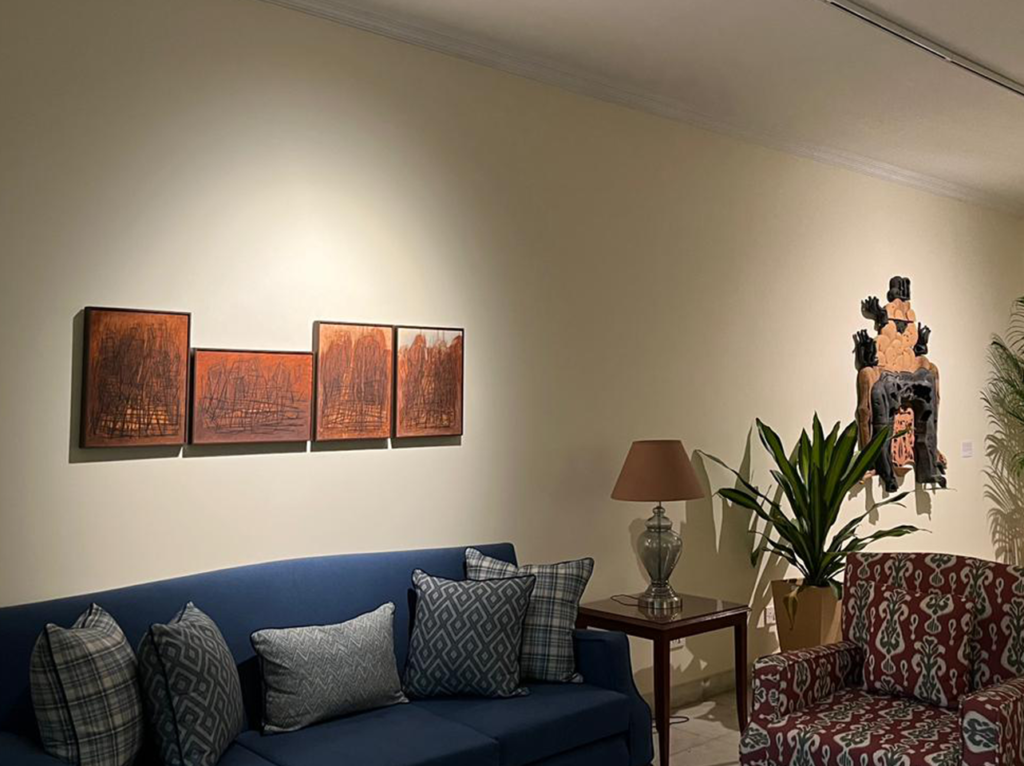
Not every space needs to become something else to be meaningful. When we opened the doors to our new space in Panchsheel, we resisted the instinct to convert, polish, or formalise. It was a home, and we allowed it to remain one — because we believe that art, like stories, is at its most powerful when it stays true to its nature. Rather than imposing the language of a gallery, we listened to the rhythms of the space itself. Its rooms suggested pauses, its light shifted gently through the day, and its domestic scale encouraged proximity rather than distance. By allowing the space to guide us, we found a way of showing art that felt honest — unfiltered, lived-in, and closer to how art exists in real life.
.
.
This way of working comes from how we have always thought about art. We are drawn to practices that are raw and honest. At Art Incept, we seek voices that reflect the pulse of our times — emerging from the grassroots, not only from the metros that are often the loudest. These are voices that document lived realities, often muted by noise. By keeping the space true to what it was, we wanted it to hold these stories with the same integrity — allowing artworks to exist without filters, and viewers to engage without the pressure of understanding or interpretation.
.
Bringing these voices into an informal, lived-in space was also a conscious way of softening the boundaries that often surround art. Too often, the experience of looking at art is framed by the idea that one must arrive with context, language, or prior knowledge. We wanted to create an environment where none of that was required — where feeling, seeing, and relating were enough.
.
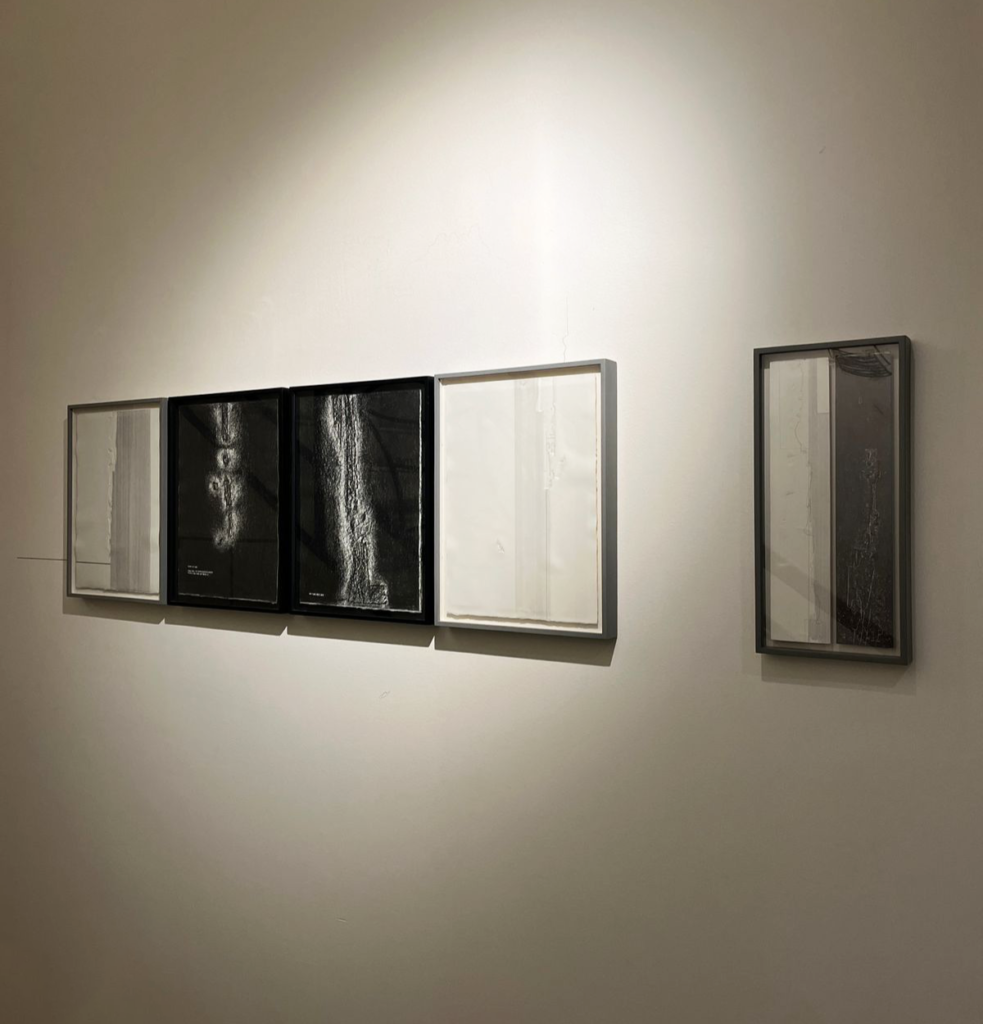
At the entrance, a line of works by Parul Sharma immediately sets the tone. Living in the congested neighbourhood of Seemapuri in Delhi, her practice explores how light itself is a privilege, and how limited access to it shapes daily life. The works capture slivers of light, questioning how much of it we are entitled to, while also linking this light to her own experiences as a young woman navigating the vast, often overwhelming life of a metro city. Onsite, the artist extended her work into the gallery itself, drawing a line on the walls that physically brings the dialogue into the space. Positioned at the entrance, these pieces quietly remind visitors of the disparities that shape different worlds, offering a moment of reflection even before one steps further inside..
.
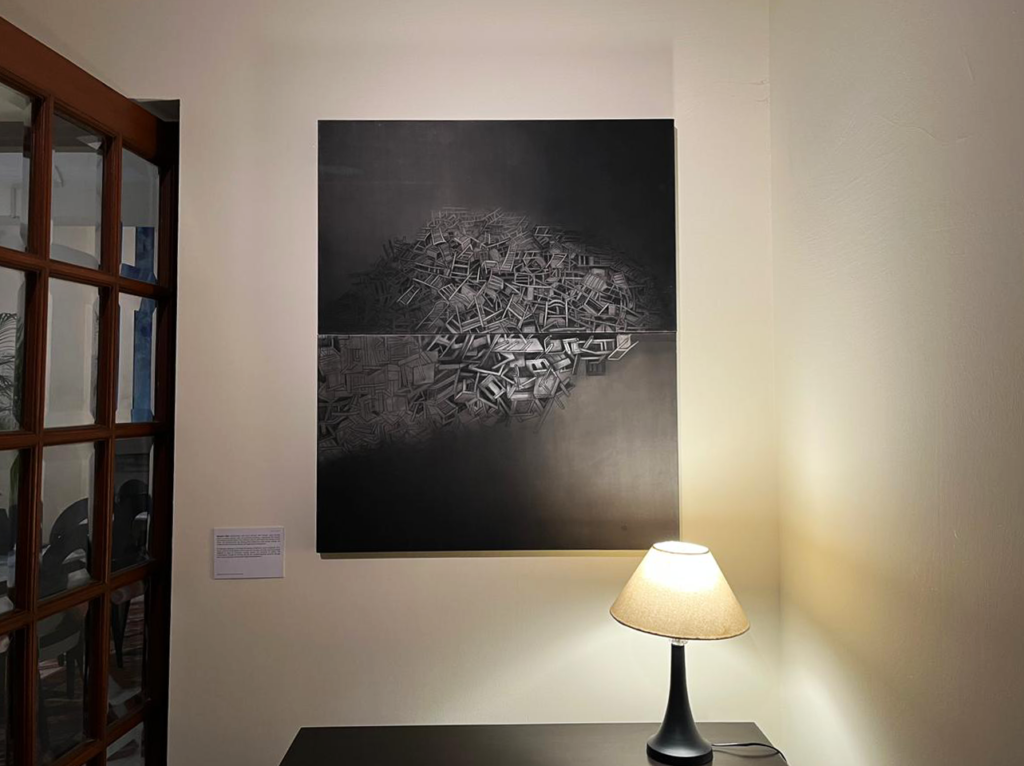
Bedamati’s charcoal drawings of stacked chairs sit comfortably within this approach. At first glance, they can simply be seen as beautifully executed works — quiet, precise, and grounded in the realm of still life, a genre often perceived as static or uneventful. Yet, for those who choose to look closer, these seemingly ordinary objects open into layered conversations around class, memory, ownership, and desire. The work does not demand this reading, but it holds space for it.
.

In contrast to the quiet corners, the double-height space is dominated by two large works by Santanu Dey, bathed in natural light from above. His paintings explore how we often decorate our homes with blue flower pots while overlooking the preservation of the blue skies above — a poetic reflection on attention, care, and what we choose to value. Placing these works in the double-height area not only allows them to breathe and be fully appreciated, but also demonstrates how large, expressive works can be integrated into a domestic scale without feeling overwhelming. The light, the height, and the careful positioning together create a dialogue between the architecture and the ideas in the work.
.
In a setting like Panchsheel, this openness becomes easier to inhabit. Art is encountered in passing and in moments of pause. It sits within rooms that invite you to linger rather than move on, allowing the experience to unfold at your own pace. The absence of formality makes space for intuition — for noticing what stays with you, and for allowing meaning to emerge quietly, if and when you choose.
.
Some of the most meaningful moments while shaping the space came from placing works in unexpected corners. A small writing table with a lamp, a quiet nook that might otherwise go unnoticed — these became sites of a different kind of magic. Away from the conventions of formal display, art found itself in conversation with the everyday, creating moments that felt intimate, personal, and quietly transformative.
.
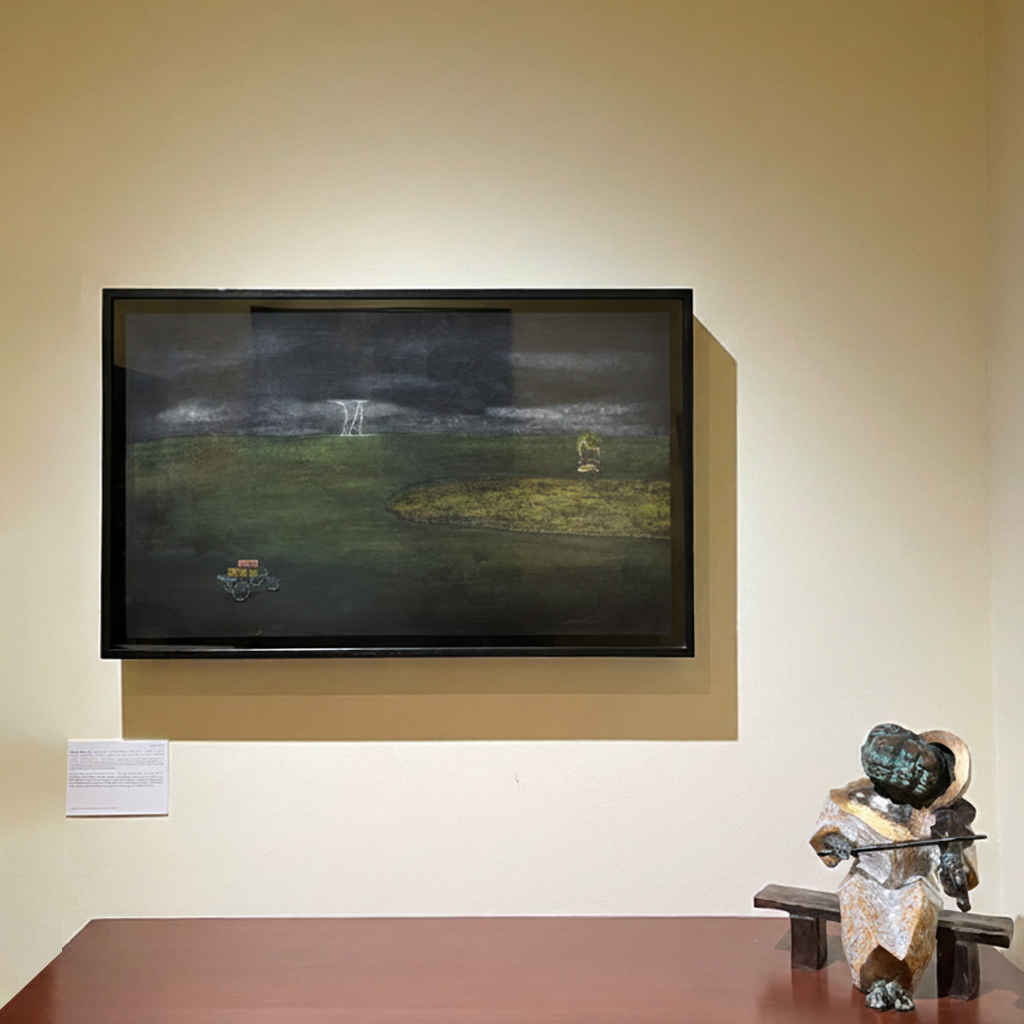
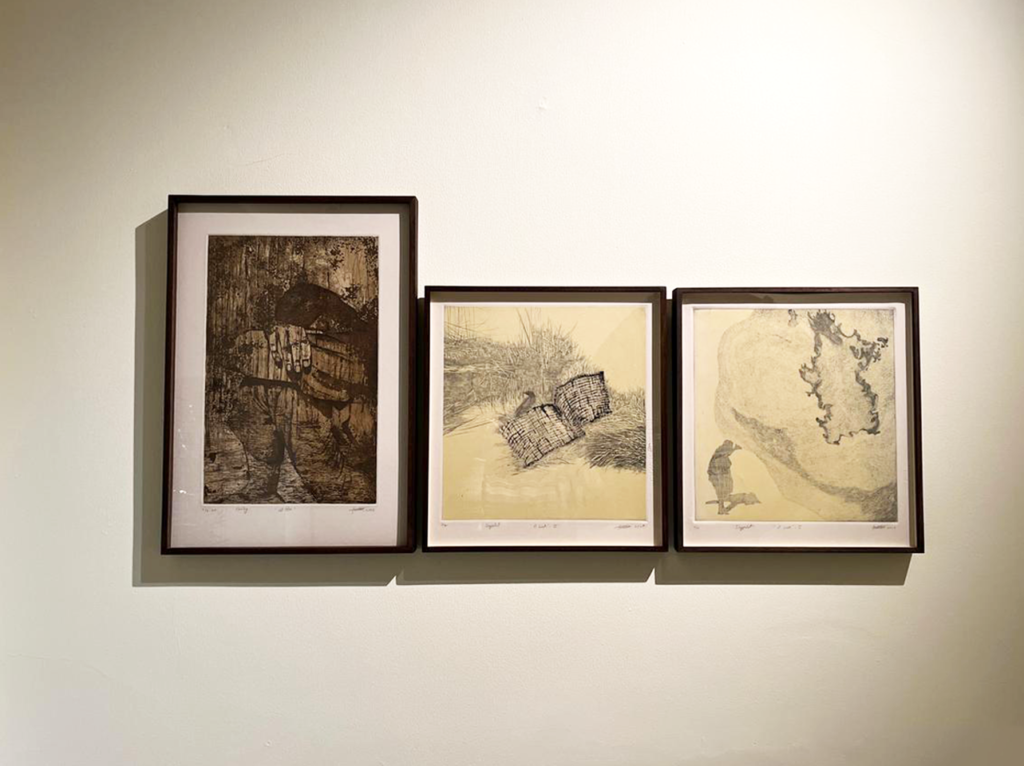
One painting rests above a console, at first glance a lovely yet slightly strange landscape. Whispers of nostalgia breathe life into it, as the artist’s memories of Baroda’s nights merge with Tripura’s tranquil vistas. Lily leaves dance across the lake, fish crates await their journey, and a distant storm gathers, cleansing the atmosphere. The juxtaposition of these moments captures both the fleeting and cyclical rhythms of life — and in this unassuming corner, the painting invites pause, reflection, and connection on the viewer’s own terms.
.
Together, these small gestures — the nooks, the corners, the carefully placed works — shape the rhythm of the space. Each room becomes an invitation to engage with art in a personal way, to notice what resonates, and to allow meaning to emerge naturally. The experience of art is not dictated; it is lived, felt, and quietly shared.
.
In the end, the space is less about scale or spectacle and more about presence, honesty, and connection. It is a home for art that is raw, unfiltered, and alive, and for the conversations, reflections, and quiet moments it inspires. We hope that anyone who visits leaves with more than impressions of objects on walls — that they take with them the feeling of art as part of life, intimate, accessible, and deeply human.