
By Shankar Tripathi
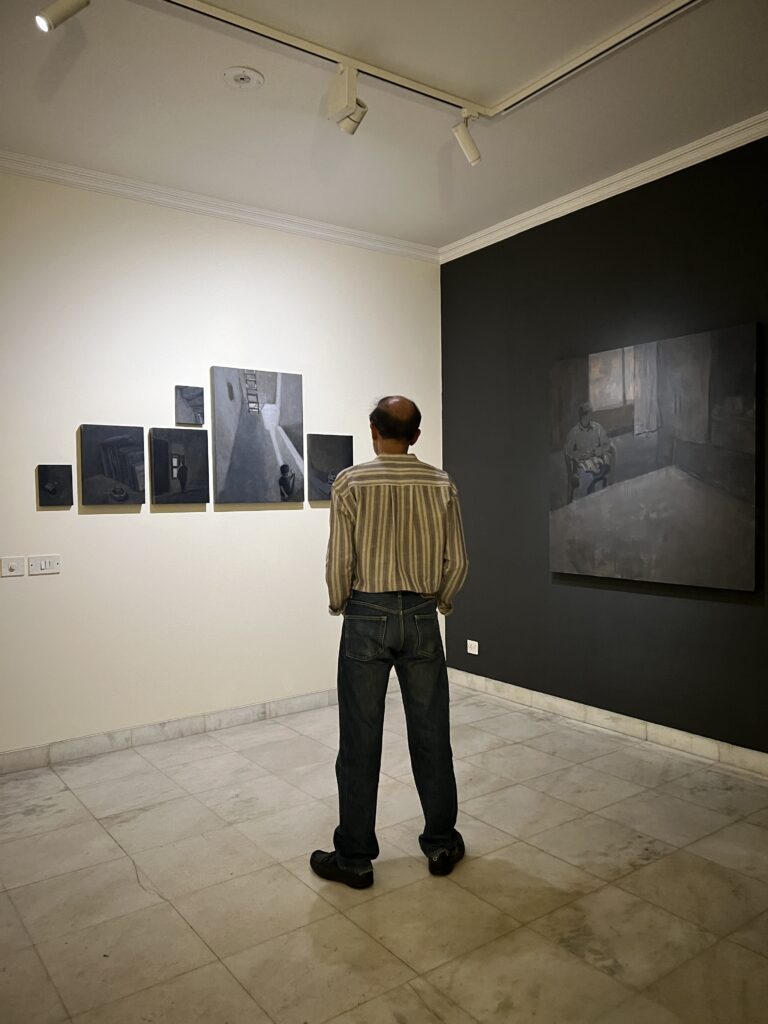
The ongoing exhibition ‘Diaries, Soliloquies and Stories we Tell….” curated by Prima Kurien, inhabits the fragile threshold between remembrance and loss; a consciousness suspended, shaped by cultural inheritance, personal memory, and the quiet pressures of the social world. Within this space of in-betweenness, identity is neither fixed nor entirely unmoored; it flickers like light passing through gauze. The works assembled here arise from that tremor. They gather what remains—a dried rose pressed between pages, an old postcard bearing a fading script, a broken tile salvaged from a once-familiar floor—and elevate these fragments into tender archives. Through such objects, grief and celebration become indistinguishable dialects within the same language of nostalgia.
.
.
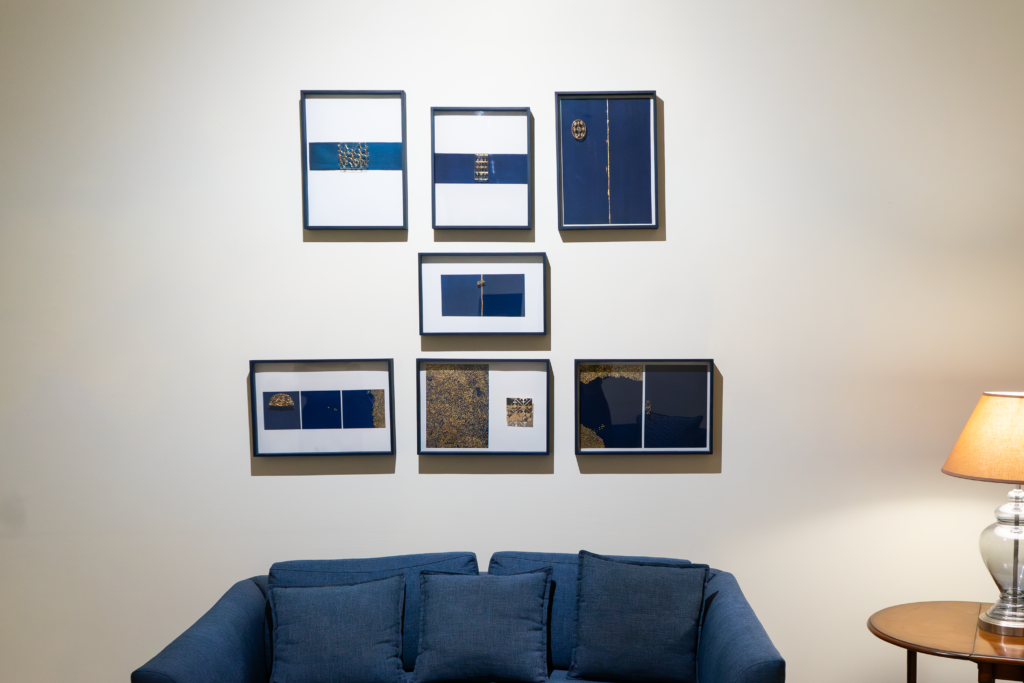
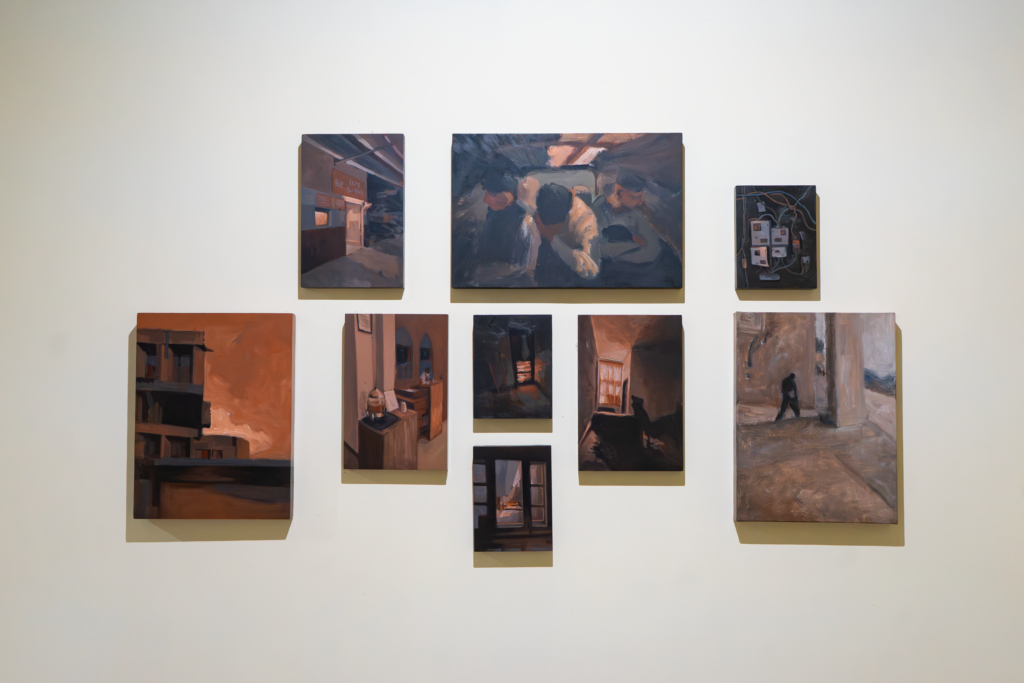
In Ariba Akhlaque’s practice, this threshold becomes palpable: memory is both relic and reinvention, an imagined archive where personal objects breathe again, tracing the delicate seam between mourning and gratitude. Here, Rajat Kumar lingers in the rooms Akhlaque’s objects once occupied. His paintings move through the quiet aftermath of absence: a chair that feels paused in time, a corner too still, the air thick with what cannot return. Emotion precedes method; paint becomes pulse. Everyday spaces, once warm with familiarity, turn distant and estranged. This is a place where the atmosphere—silent, heavy with an aching, a hiraeth—itself becomes the protagonist.
.
.
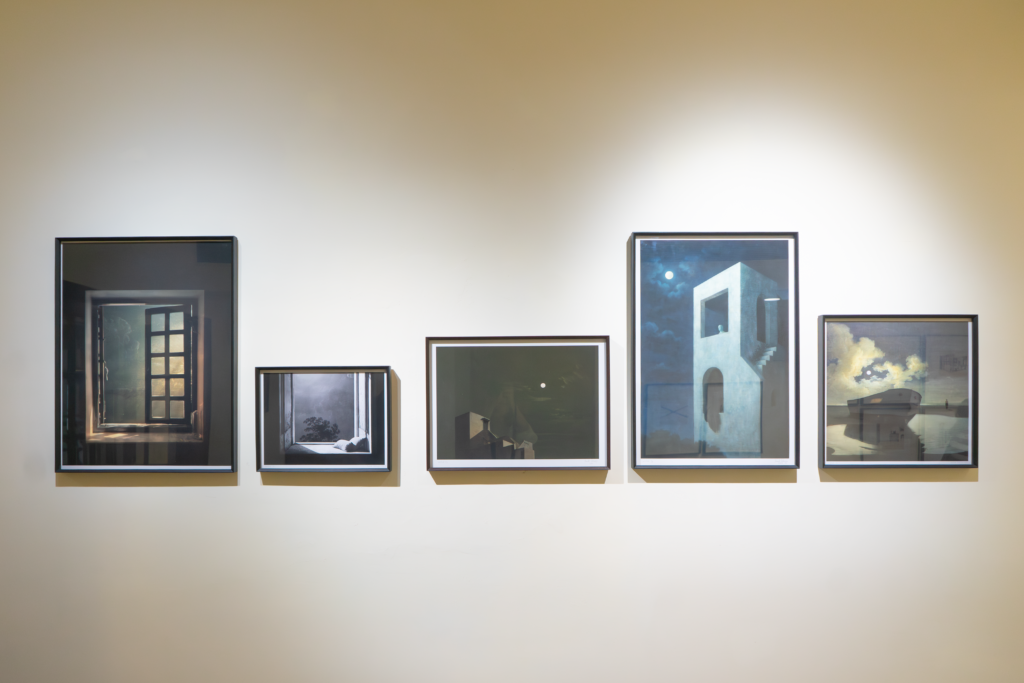
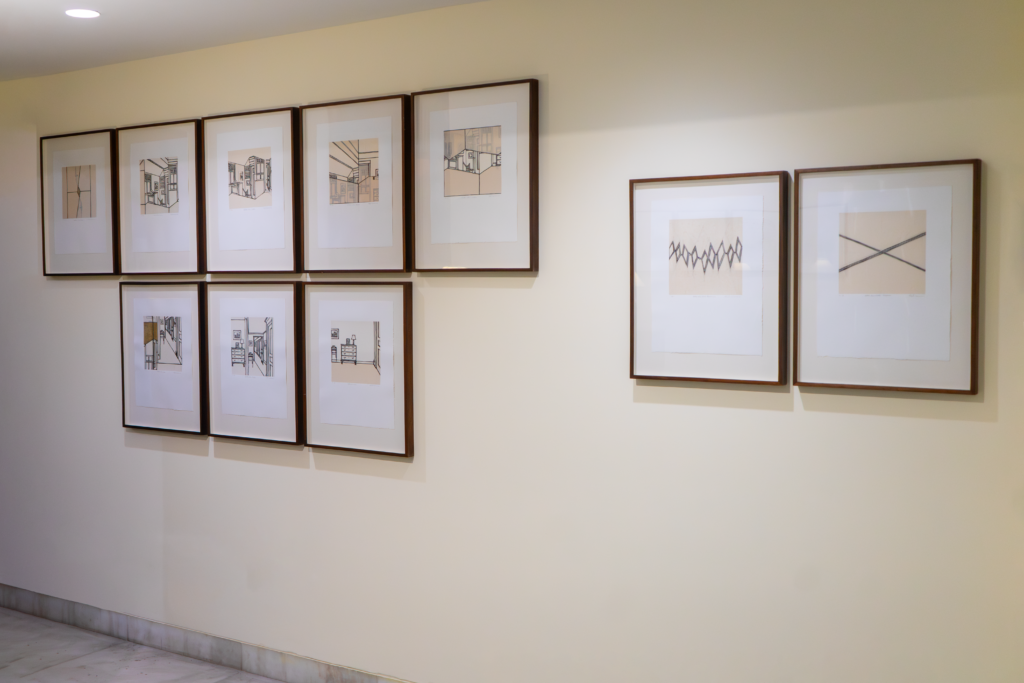
Yet beyond these rooms, other terrains unfold. In Anirudh Acharya’s digital dreamscapes, photographs dissolve into painterly atmospheres where figures inhabit vast, amorphous landscapes without a clear beginning or end. These are inner geographies—solitary, philosophical, and suspended between memory and imagination. Space stretches into reverie, reflecting upon the quiet loneliness of personal and collective narratives. Similarly, Nandini Chirimar interrogates the very structure of where we stay. She disassembles architectural certainty— cutting, layering, reconfiguring walls and stairways—until physical space gives way to unwritten space. Her rooms contain no bodies; a shadowy, ethereal presence where Identity washes up against surfaces, where absence becomes contour.
.
.
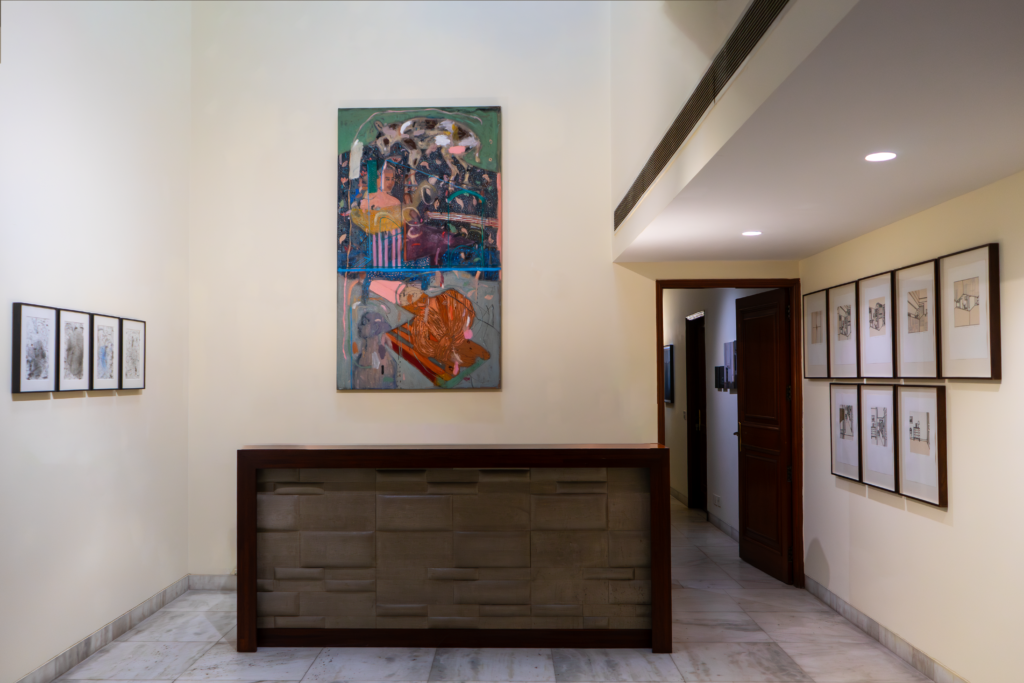
Threaded through these meditations is the gentle, ever-shifting rhythm of daily life. In Rinku Choudhary’s layered compositions, a woman moves through her home as both inhabitant and witness. Tasks dissolve into thoughts; gestures overlap like translucent veils, chaos softens into choreography. Patterns, placements, and intuitive forms turn ordinary moments into meditations on presence and connection.
.
.
Across these varied practices, diaries become landscapes and soliloquies become rooms. Here, to paint is to dwell— a means of fashioning shelter from memory and imagination alike. Utopian niches rise from longing: tidal gardens suspended in indigo twilight, stairways ascending toward improbable skies, interiors that open into speculative horizons. Between what was and what might be, these artists carve out spaces to inhabit again. In Diaries, Soliloquies and Stories we Tell…, becoming is a tender, surreal labour—an act of rewriting the self as landscape, of letting absence seed possibility. What emerges is a new interior: porous, luminous, and profoundly
alive.
Exhibition is on view till 26th March at The Edit by Art Incept, S-137, Panchsheel Park, New Delhi (Mon-Sat , 11 am – 6 pm)