
Deepanjali Shekhar in conversation with Gayatri Singh
.
Born in Patna, Bihar, Deepanjali Shekhar is a visual artist whose practice unfolds through drawing and painting, exploring memory, the body, and unspoken emotional states. She completed both her B.F.A. (2014) and M.F.A. (2016) in Printmaking from Kala Bhavan, Visva-Bharati University, Shantiniketan, West Bengal. Trained in printmaking, etching, embossing, stop-motion animation, and videography, her practice later expanded into painting. Her years at Santiniketan played a formative role in shaping her deep connection with nature, which continues to inform her visual language. Having lived and worked across Bihar, Uttar Pradesh, Santiniketan, and Baroda, Deepanjali’s work reflects layered geographies and shifting ideas of restriction, freedom, and self-discovery.
.
In this conversation with Gayatri Singh, Deepanjali speaks about the recurring imagery in her works and the experiences that shape them.
.
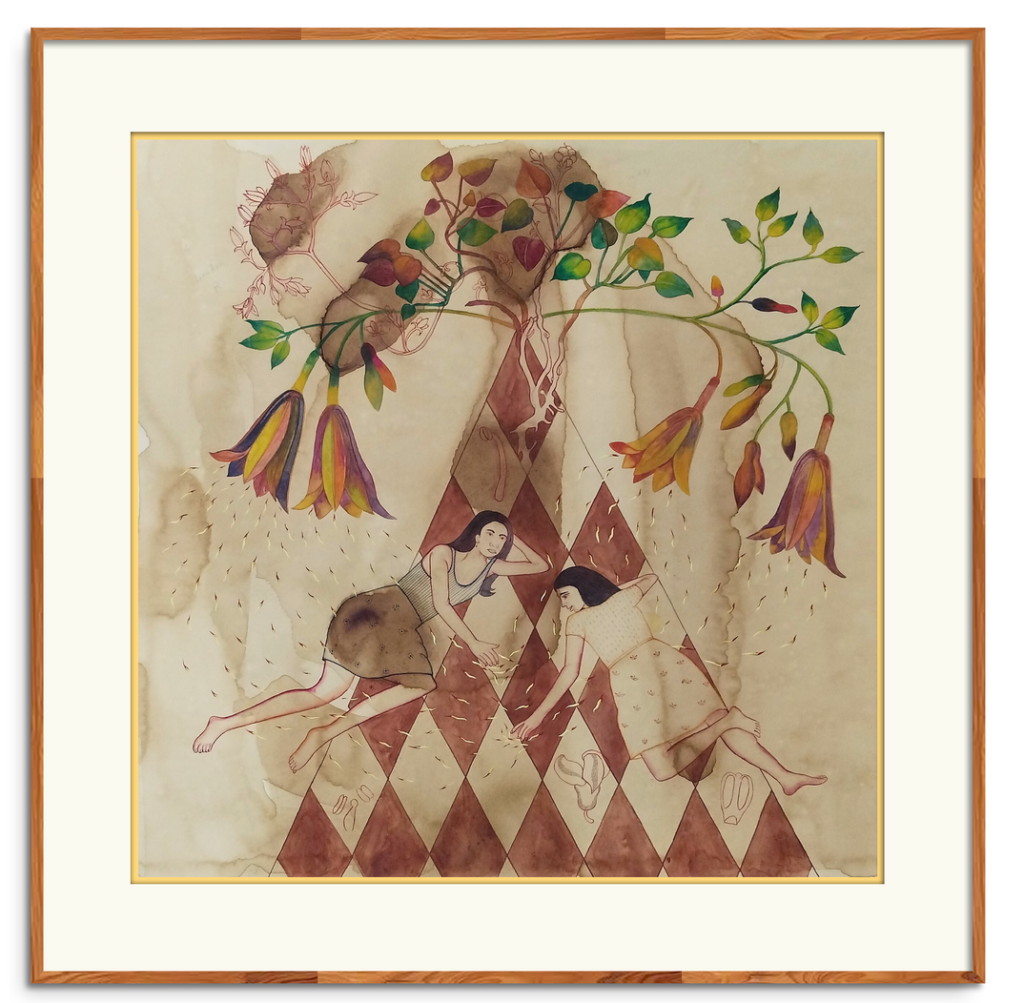
Gayatri Singh: The women in your works often appear in conversation. Are they specific people or imagined figures?
Deepanjali Shekhar: No, they are not specific people. Sometimes I draw myself, and sometimes I create imagined figures. I change the details based on the composition. The people around me, everyday faces, and moments I capture when I step outside all find their way into my work.
.
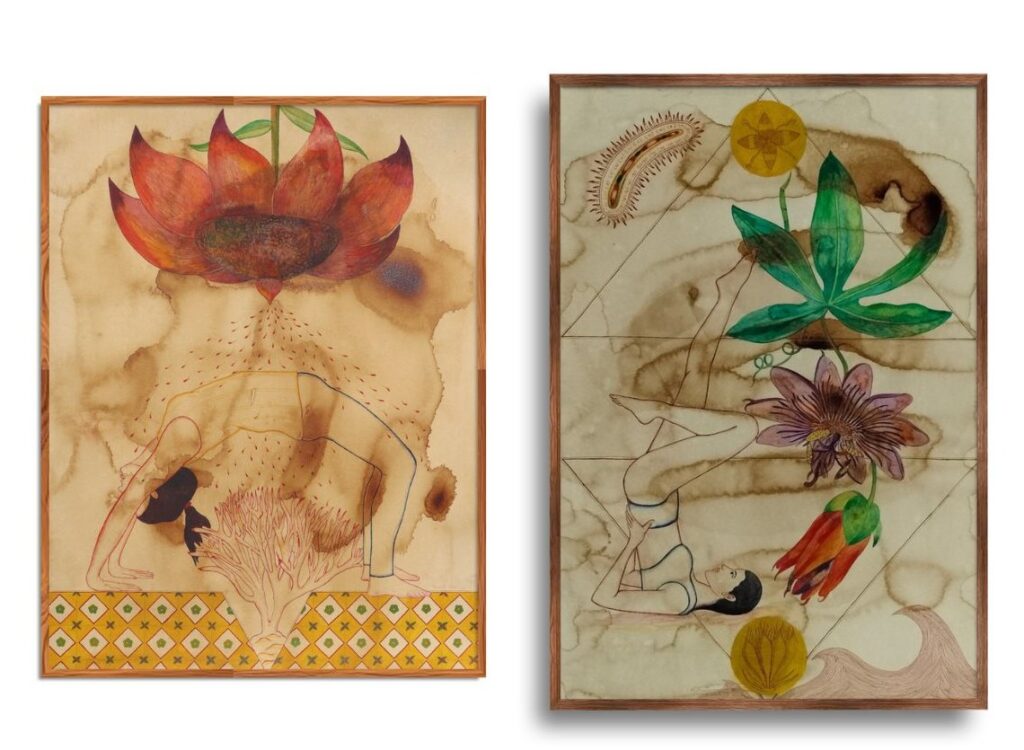
Gayatri Singh: Yoga postures recur in your drawings. What do they represent for you?
Deepanjali Shekhar: You can call it reflection and healing. When I practice yoga and truly feel it, it brings a deep sense of peace and calmness, and I go into a meditative self-reflection. That is why, in my work, I draw and use yoga poses as a way to express that experience.
.
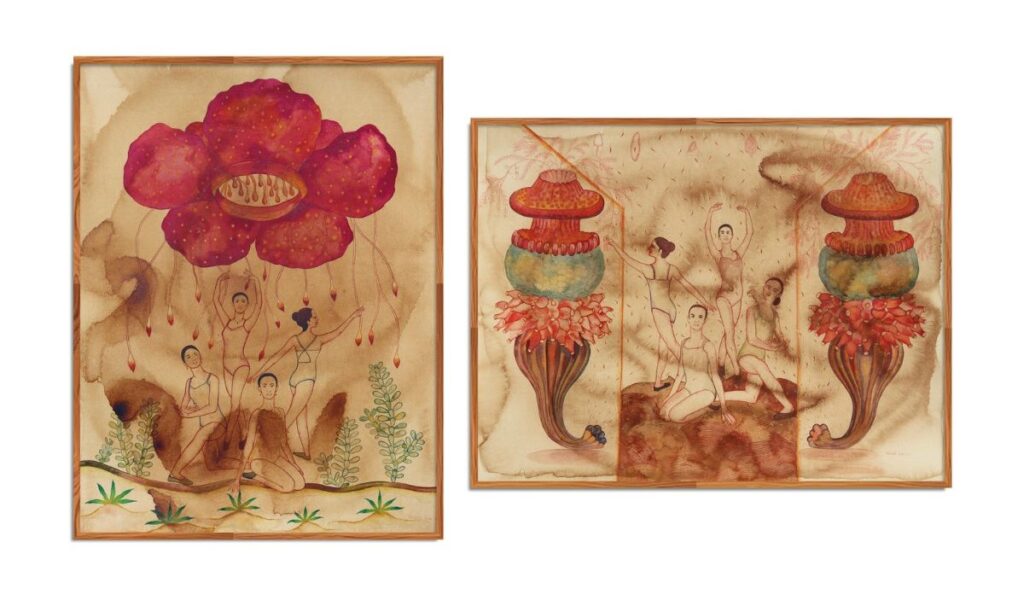
Gayatri Singh: Plants often appear alongside the body. How do you see their role in your work?
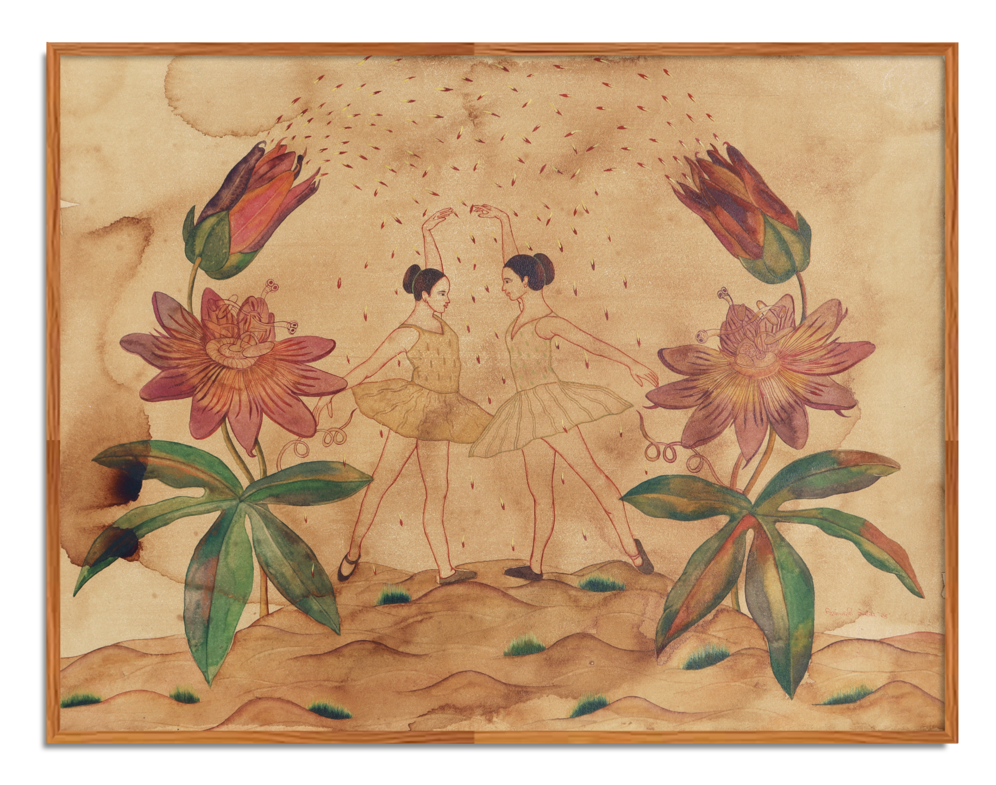
Deepanjali Shekhar: They are not dominant; they are growing together and protecting each other. It can also be seen as self-reflection and an emotional state. Many times, I try to show human emotions, feelings, and situations through nature, in both direct and indirect ways. That is why I use botanical elements to represent the different stages of a woman.
.
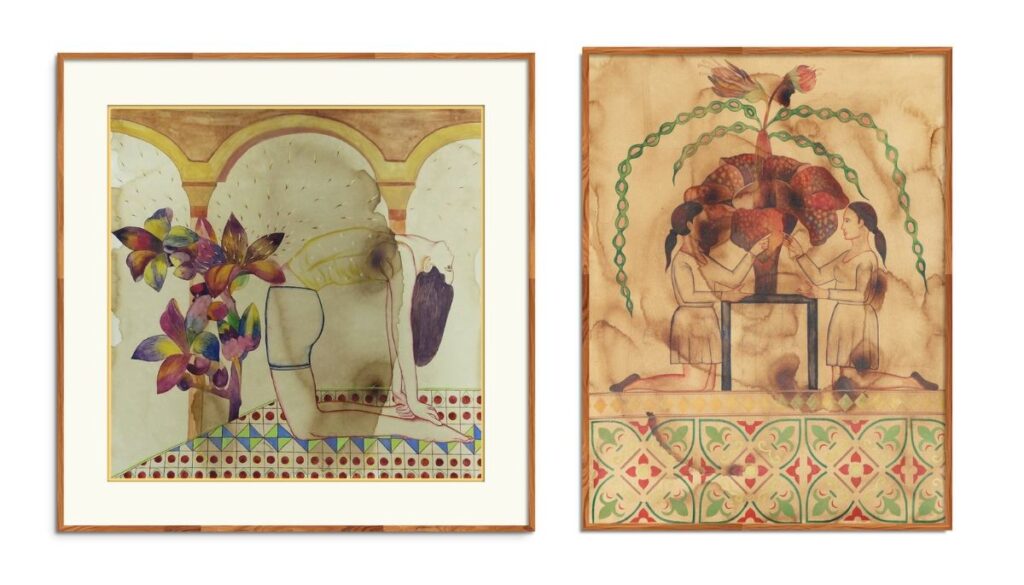
Gayatri Singh: Architectural elements like windows and tiles appear repeatedly. What do they signify?
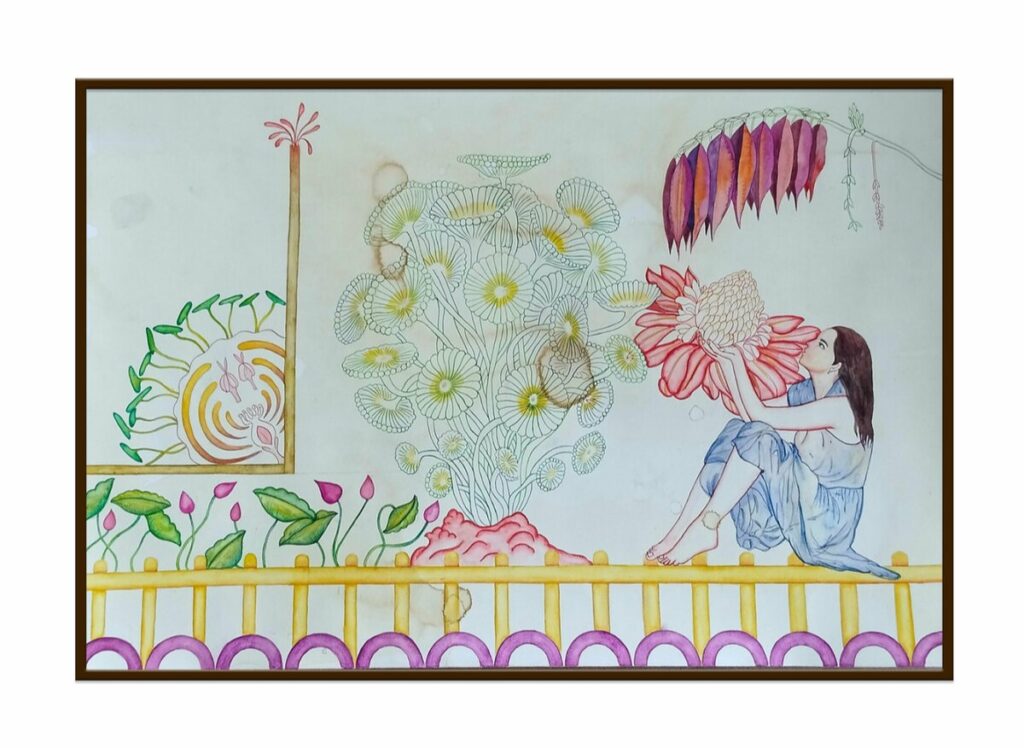
Deepanjali Shekhar: This relates to memory, restrictions, and the threshold between the inner and outer world. Because the place I come from had many restrictions, I want to bring those experiences and elements into my work.
.
Gayatri Singh: Your works often merge the human body and nature. Where does this relationship come from?
Deepanjali Shekhar: I studied in Santiniketan, and there was never a moment when we were not connected with nature. Whether moments were happy or difficult, or during festivals, everything happened under trees, around them, or through them. Many celebrations involved decorating ourselves like living jewellery, using ornaments to express feminine beauty. Over time, spending time with nature became part of my daily routine, and that is where my relationship and bonding with nature truly began.
.
Gayatri Singh: You work on tea- and coffee-stained paper. What draws you to these surfaces?
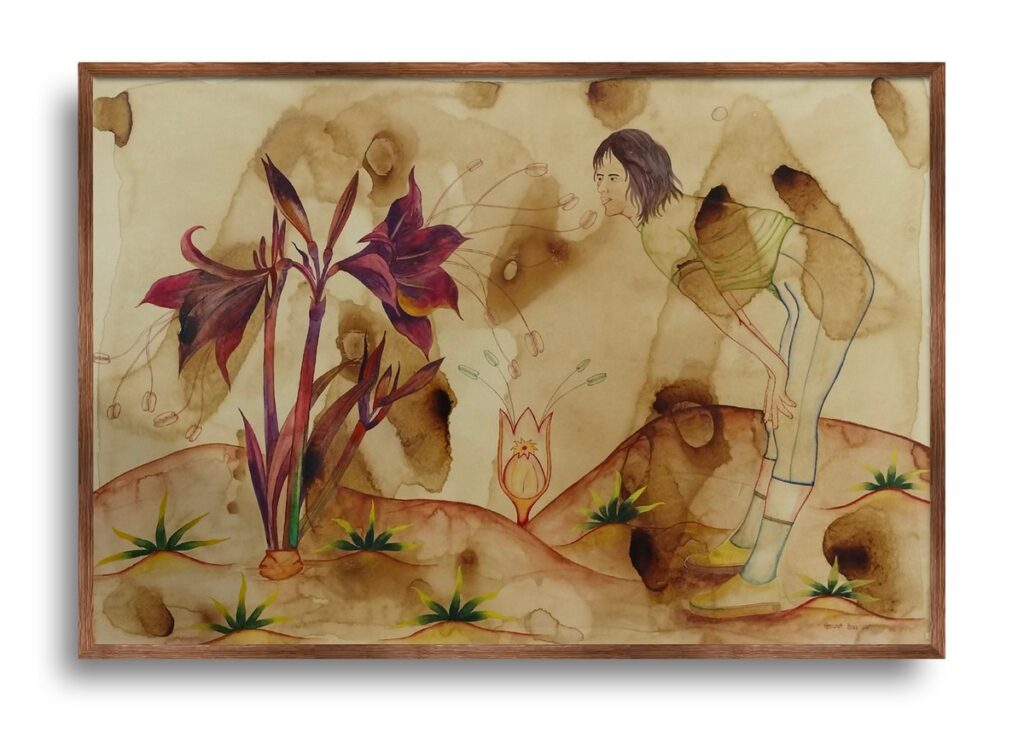
Deepanjali Shekhar: It reflects an archival sensibility, because memory always feels like old, time-worn pages. That is why I use coffee and tea tones.
.
Gayatri Singh: How have different places shaped the emotional tone of your work?
Deepanjali Shekhar: I belong to Bihar, but I was brought up in Uttar Pradesh, where I experienced many social restrictions. When I came to Shantiniketan, it felt very colourful and joyful, with people from different cultures. My relationship with nature grew stronger there. Later, moving to Baroda brought a different sense of freedom. The freedom women experience here exists at another level, and because of that, joyfulness entered my work. Now, I bring together elements from UP–Bihar, Shantiniketan, and Gujarat in my practice.
.
Gayatri Singh: While your work is deeply personal, you leave space for the viewer. How do you think about this balance?
Deepanjali Shekhar: My stories are very personal and come from society and real situations. But I leave space for viewers. The elements I use are common and familiar, and through them, people can connect with the work and tell their own stories in their own way.
.
At Art Incept, we value practices that grow from lived experience, emotional honesty, and quiet reflection. To explore works by Deepanjali Shekhar, visit our website or experience them in person at our galleries in Gurgaon and New Delhi.