
Gayatri Singh
We are living in a world that has forgotten how to stop.
Our days are a relentless sequence of swipes, clicks, and transactions—a high-speed chase with a constantly moving finish. We have optimised our productivity, our schedules, and even our free time. But in this frantic race to acquire and achieve, we have accidentally commodified the one thing that was ever meant to be unmarketable: the human spirit.
Recently, I found myself in the middle of an art fair. I understand that a fair is, by its very nature, a commercial endeavour—a place of trade and market velocity. But as I walked the aisles, I felt a profound sense of disconnect. On the surface, it was vibrant and prestigious. Beneath the surface, it felt like a high-frequency trading floor. I watched as people moved through the aisles with checklists in hand, their eyes scanning labels for names and price points rather than lingering on the canvases for meaning.
.
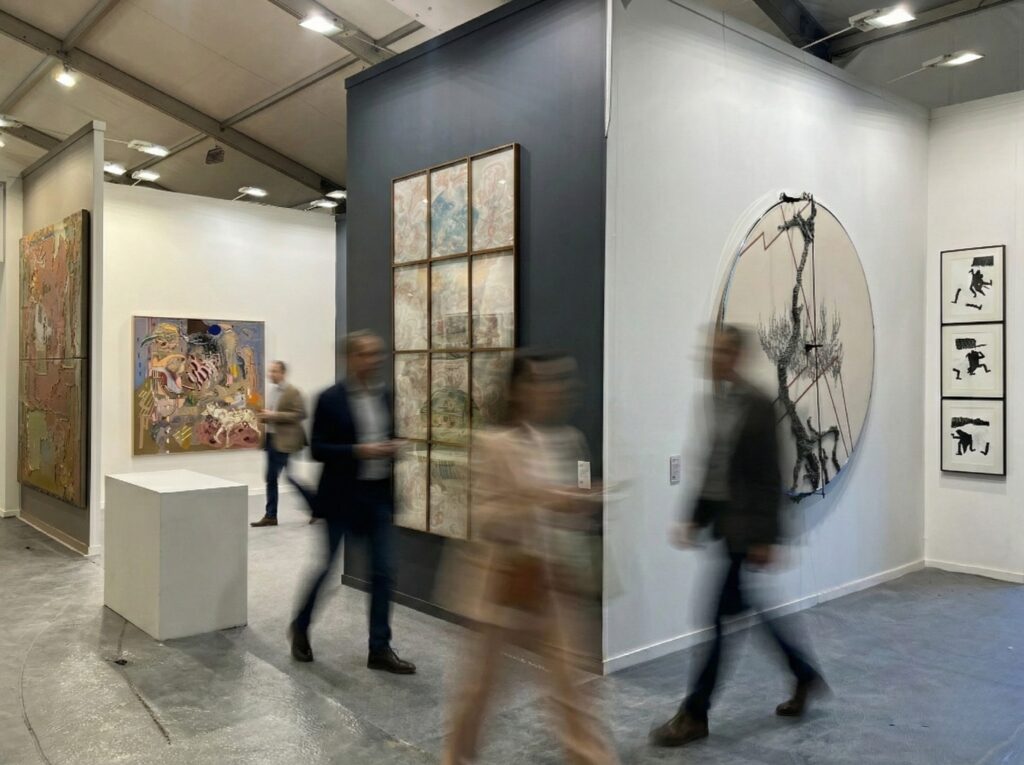
The tragedy was that the artists were there, standing by their work, ready to speak, ready to share the depths of their creative process. But there was almost no one to listen. There was a palpable urgency to possess and transact, but not the desire to truly engage.
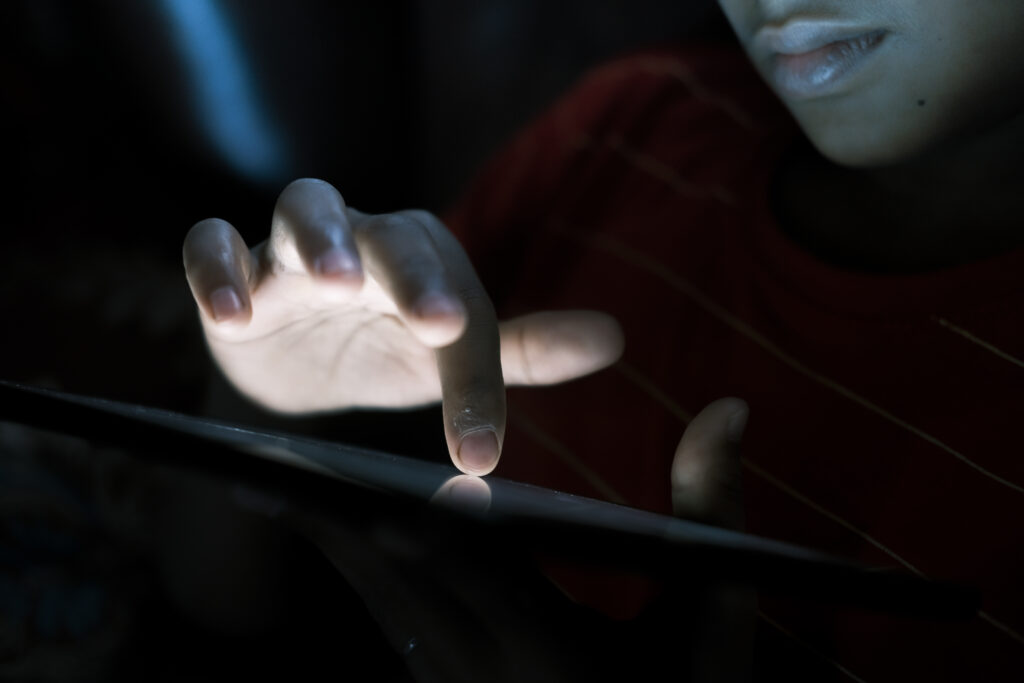
I walked those aisles carrying a heavy weight. Just before the fair, I had read a news story that shattered my sense of where we are going as a society. Three young sisters, children, had followed a sequence of instructions within a digital game until they reached a ledge and jumped. There was no dispute, no sudden burst of anger. There was simply a terrifying, silent obedience. Their young brains had been controlled by an external flow, moving from one instruction to the next without the intervention of a “pause.”
.
.
Standing in the centre of that crowded art fair, surrounded by the “loudest voices” and the frantic noise of commerce, the connection hit me with devastating clarity. Whether it is a child being programmed by a digital game or a collector being programmed by market trends, we are all losing our “inner brake.”
.
Has the art world become the very thing it was supposed to save us from?
The Instruction-Led Life
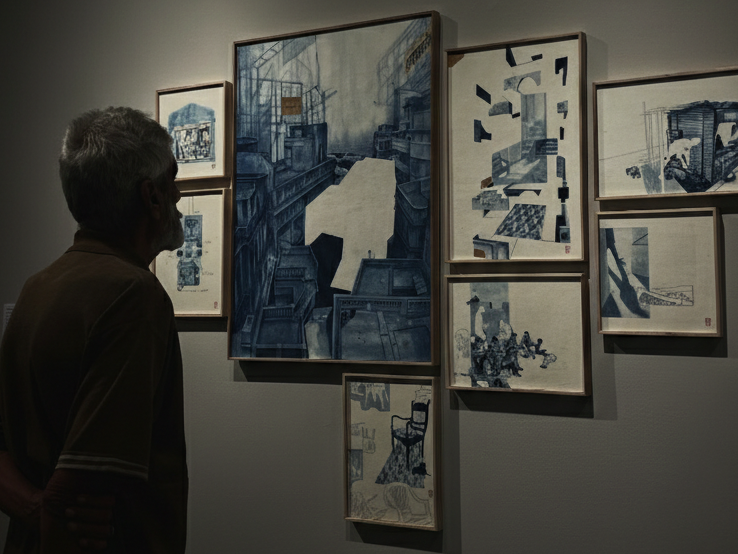
Art was intended to be our sanctuary from a commercial, material existence. It was meant to be the “friction” in a world that is too smooth, too digital, and too transactional. It is supposed to make us stop and question the status quo—to ask why we move so fast, what we are chasing, and if the path we are on is truly our own. When you stand in front of a piece of art that truly moves you, the world’s noise is supposed to fall away.
But when art becomes just another asset class, we stop seeing and start following instructions. We listen to voices that tell us what is “safe,” what is “blue-chip,” and what “fits.” We look at the signature before we look at the stroke. By doing this, we strip art of its power to heal us. We treat it like a stock, and in doing so, we ensure it can only give us a financial return, never an emotional one.
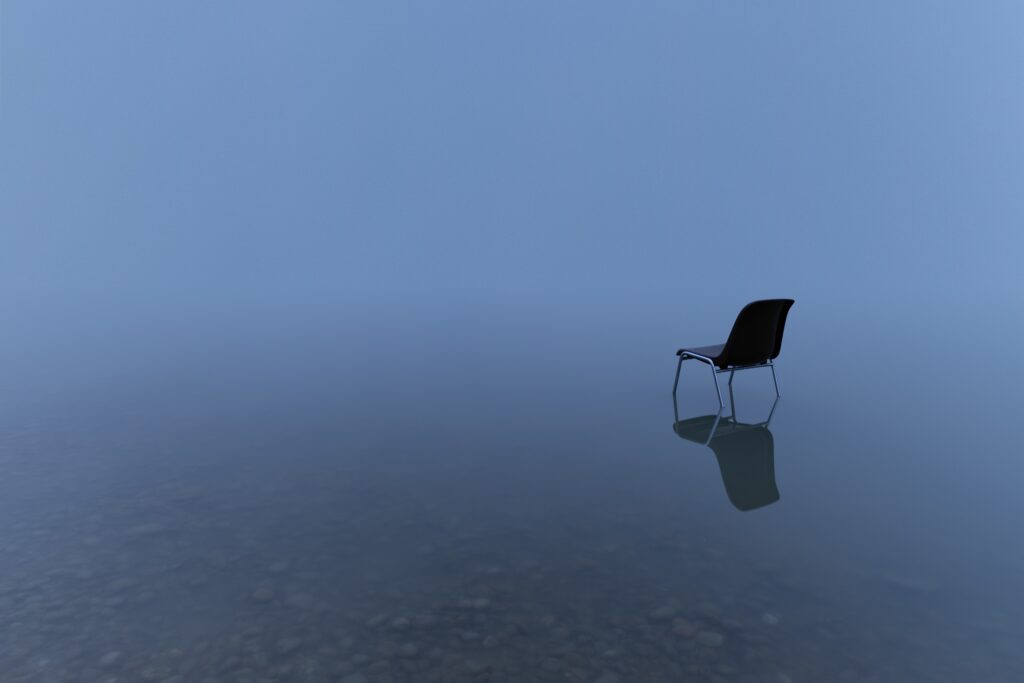
We have lost the “Pause.” And when we lose the pause, we lose our soul.
.
.
The Power of Authenticity
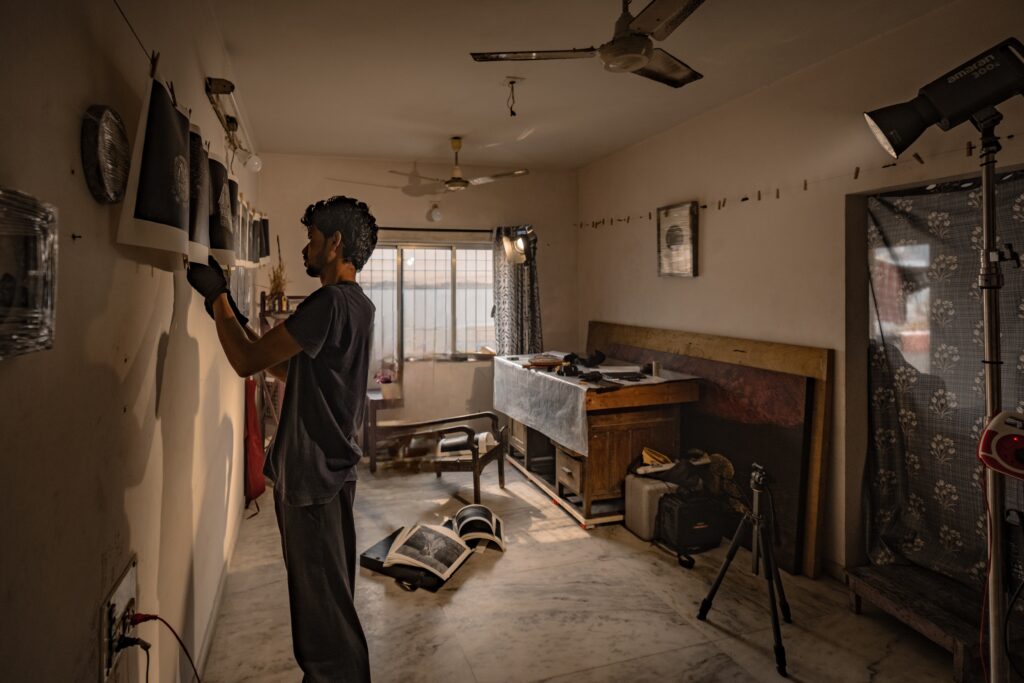
Art Incepts’ mission has always been to champion the “raw” and emerging voices, those who haven’t yet been impacted by the machinery of the market. Their work is deeply sensitive, and vibrating with an honesty that is hard to find easily.
To engage with this kind of art requires us to slow down.
Because these artists don’t come with a manual of market value, you are forced to rely on your own sensitivity. You have to walk into the room without the baggage of “who is who.” You have to look at a canvas and ask: Does this see me? In that moment, you discover yourself through the art. This is the “Emotional Return,” and it is the most valuable currency in the world.
.
Why the Soul Leads the Market
There is a common fear among collectors that “buying with your heart” is financially reckless. We have been conditioned to believe that sensitivity and smart investing are mutually exclusive.
.
I believe the opposite is true.
History has shown us, time and again, that the artists who eventually move the world are the ones who were first able to move a single soul. Authenticity outlasts trends. A “raw” voice that speaks a profound human truth might be lost in the noise today, but human truth is a scarce resource. And in any market, scarcity drives value.
If an artist is powerful enough to make you stop in your tracks—if they are able to pierce through your cynicism and make you feel something real—they possess a talent that is rare. If they can move your soul, it is only a matter of time before they move the world.
The financial return isn’t a separate goal; it is the natural shadow cast by the emotional return.
When you support an emerging artist because their work resonates with your spirit, you are investing in “Human Capital” in its purest form.
.
.
Follow Your Heart
Do not buy art to fill a wall. Fill a wall because the art filled a void in you.
When you look at a piece of work, look for the vibration. Look for the hand of the artist. Look for the struggle and the sincerity.
“If you let your soul hear the artist, you aren’t just buying a canvas; you are participating in the survival of human sensitivity.”
The joy of collecting is not found in the transaction; it is found in the relationship. It is found in the knowledge that you saw something in an artist before the rest of the world caught up. If you start to discover yourself through the art that moves you, you will experience a richness that no bank account can reflect. And eventually, you will find that the financial returns follow naturally, because you had the vision to value what is truly priceless.
.
.
Are you listening to the loud instructions of the world, or can you still hear the quiet whisper of your own spirit?
Let’s pause. Let’s truly see.