
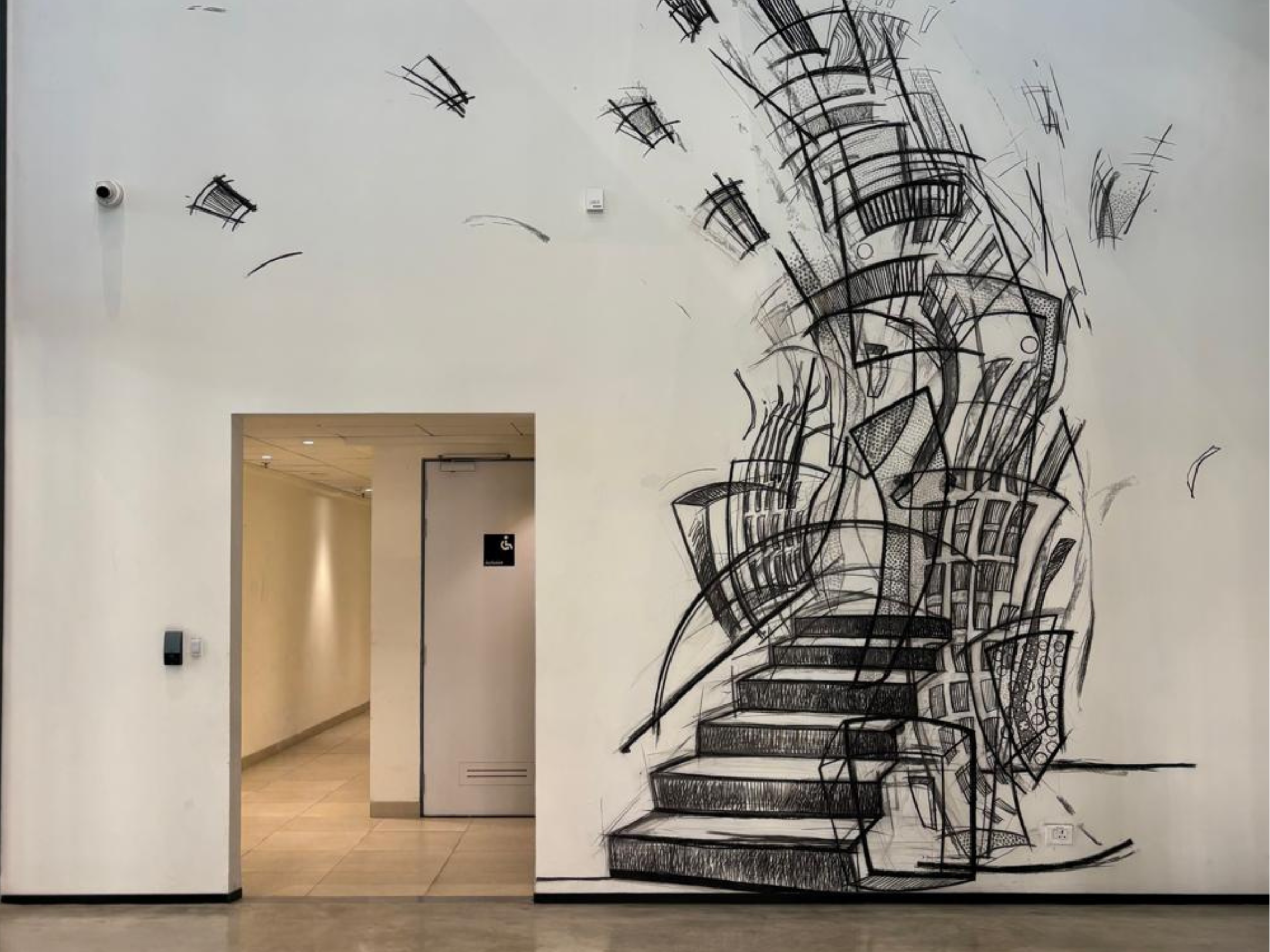
Under Construction- Parul Sharma
Written by Shankar Tripathi
August 17, 2026
A building does not rise all at once. It begins in the unseen, with a clearing of ground, a marking of intent, a line drawn where none existed before. Long before the walls stand upright, before the façade begins to speak, there is a quiet negotiation with space: what can be held, what must be opened, what resists. In the practice of Parul Sharma, this negotiation becomes both method and metaphor. Her work unfolds like a city under construction, and like the figure who moves through it, observing, absorbing, and in subtle defiance, reimagining its terms.
I. Foundations
Sharma's practice begins, and rests, in motion. Raised in Delhi after her early childhood in Aligarh, her formative years constantly negotiated movement: bus rides, long commutes, the in-between spaces of a city that never quite paused. What began as portraits sketched in passing slowly gave way to a different kind of attention, a noticing of how space compresses and expands, of how a window, a corridor, or a façade holds within it an entire atmosphere.
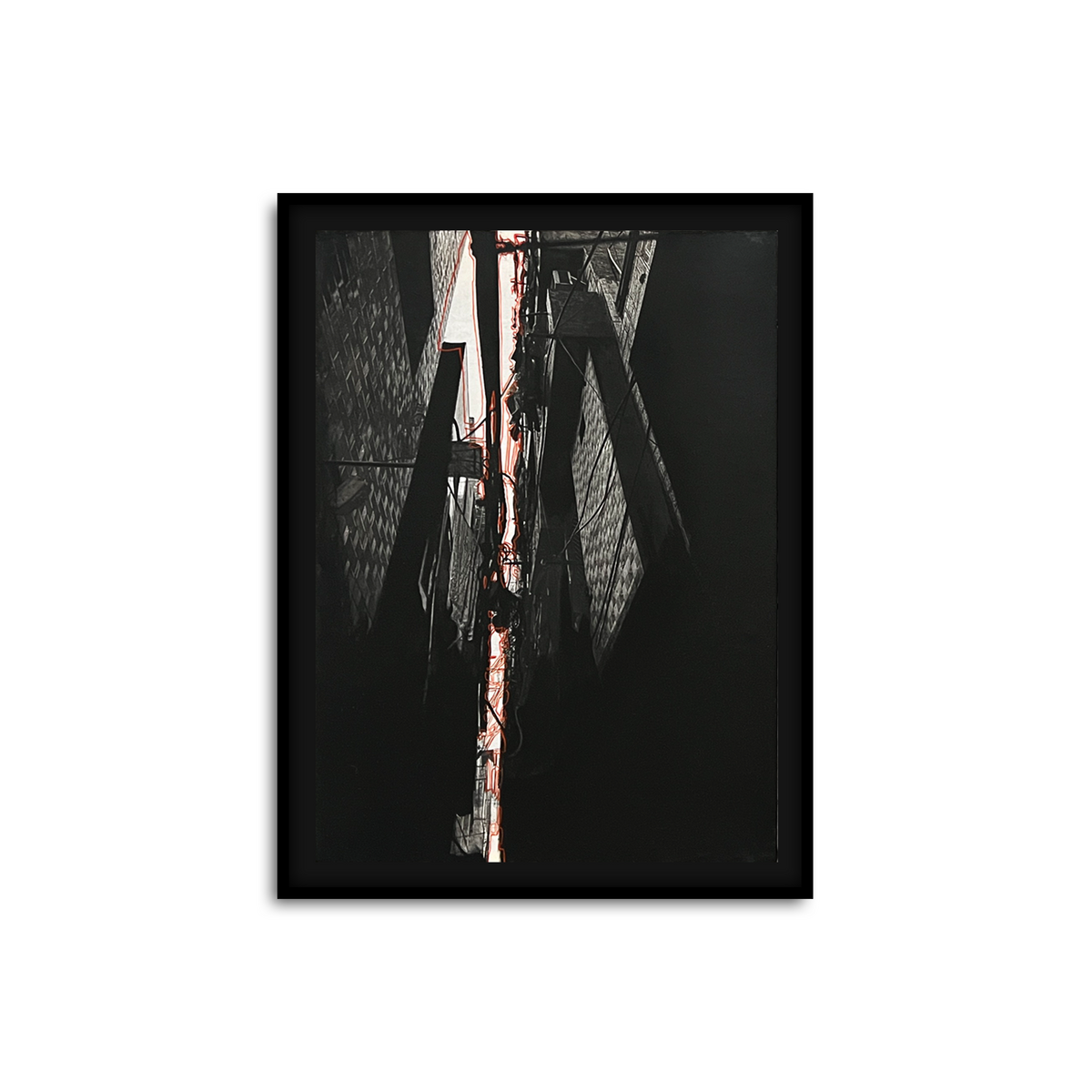
The locality she grew up in was dense, congested, spaces folding into one another with little room to breathe. Her visits to the artist colony in Preet Vihar offered a different vocabulary: houses that stretched, surfaces that breathed, an architecture that seemed to hold endless possibilities. Works like Breathing Space I became sites where such spatial contradictions could be held and slowly transformed. One thinks here of Zarina Hashmi, the Delhi-born printmaker whose series Home is a Foreign Place mapped cities as sites of belonging and loss, where a floor plan carries the full weight of a life lived within particular walls. Like Zarina, Sharma understands that to draw a space is not to reproduce it but to make a claim on it. Space, for both artists, is never neutral. It is charged, personal, and quietly political.
II. Rising Structure
As the structure begins to rise, so does resistance. The city Sharma moves through is not equally accessible. Questions of gender, of who can move, who can occupy, and who can build, become unavoidable. In college, she encountered a familiar refrain: that women could not undertake large-scale works, could not labour across height and surface, could not command space in the way murals demand. Her response was not rhetorical. It was spatial.
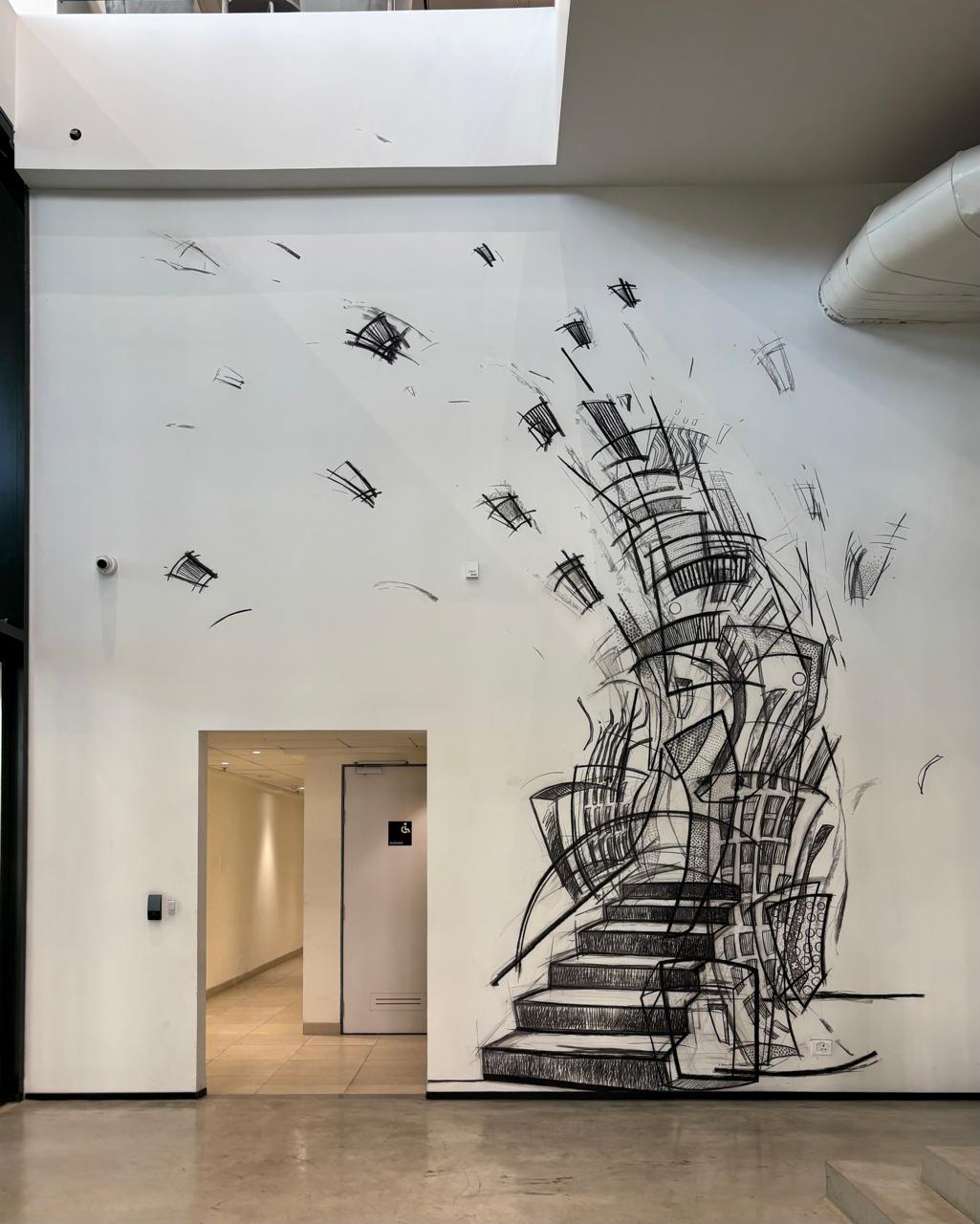
Around 2019, she began working directly on the walls of her studio, allowing the work to extend without constraint. What began on one surface continued onto another, crossing thresholds, climbing toward the ceiling, reaching the edges of adjacent studios. It was an encroachment of pigment on the plastered surface, a foreign presence of something that should not be there, and equally a liberating march, questioning the logic of what belongs where.
The parallel that surfaces most naturally is Gordon Matta-Clark, the American artist who, in the 1970s, cut literal openings through the walls and floors of condemned buildings in works like Splitting and Conical Intersect, turning architecture into a medium of social critique. Where Matta-Clark's interventions were subtractive, carving absence into existing structure, Sharma's are additive, pressing forward with pigment and gesture until the surface surrenders its assumed limits. Both share the conviction that the built environment is a site of power, one the body can question. In works like Mapping of the Sky, her lines construct their own architecture, gestural and restless. The wall becomes, as she puts it, not a limit but a direction
III. Interiors
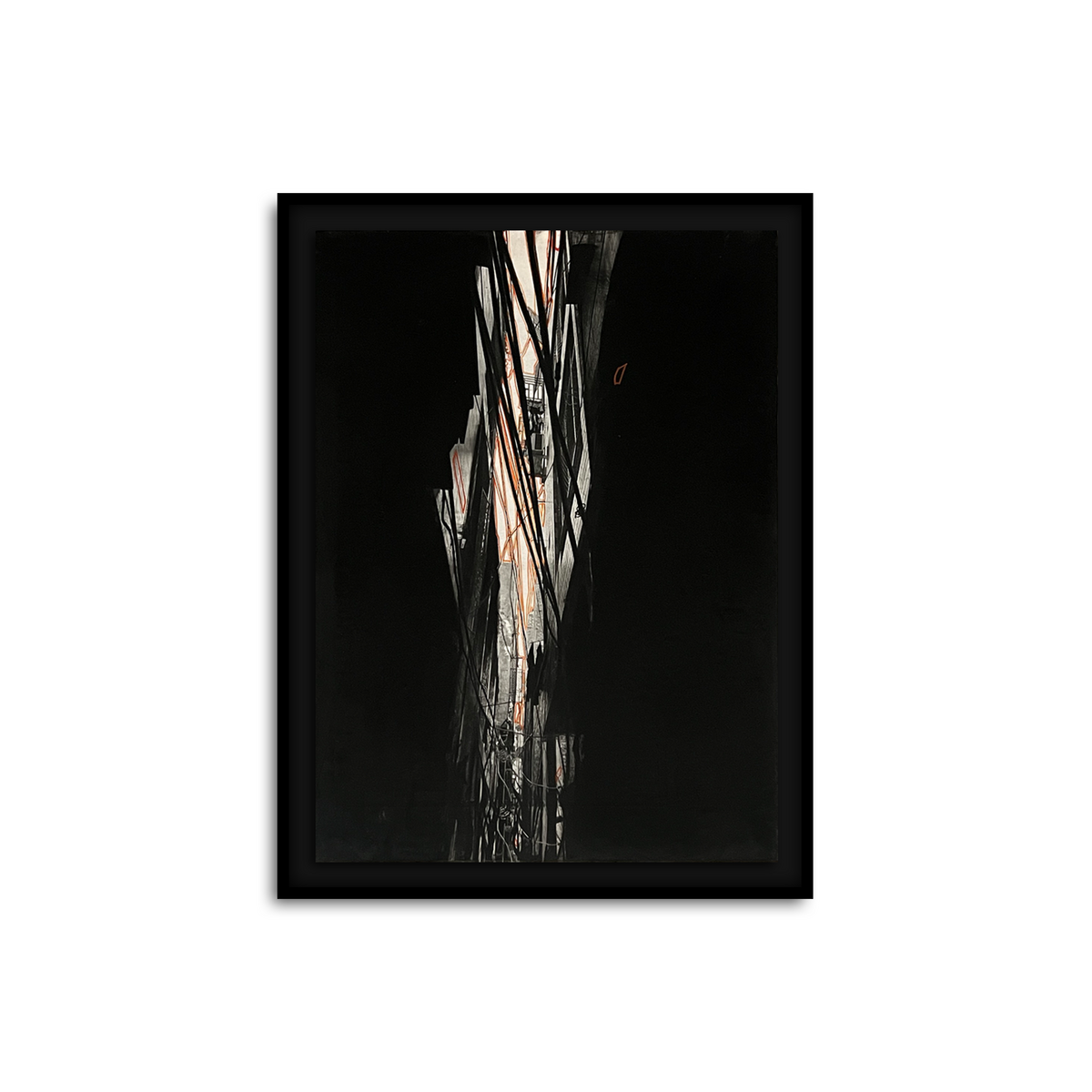
If the exterior establishes form, the interior holds life. In her earlier years, working through the night from midnight to around four, Sharma found herself surrounded by the city's relentless cacophony. Exhaustion, density, the constant hum of activity became her materials. In works such as Sky is Orange, lines accumulate, overlap, interrupt. There is a sense of pressure building within the frame, yet within the apparent chaos, a rhythm persists, a pulse that mirrors the city's own.
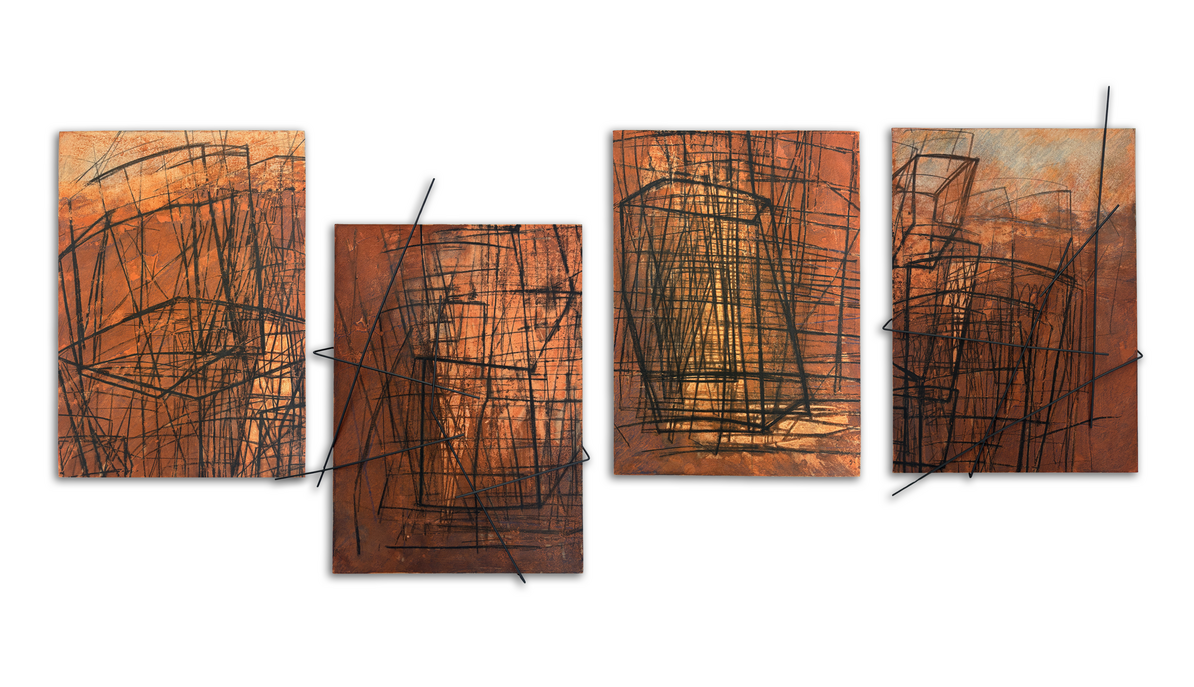
Beyond illumination, the series moves into territory harder to name. Drawn to photography and to the quality of digital glitches, images disrupted and partially erased, Sharma searches familiar places for what has been quietly dropped from the frame. Her preoccupations here rhyme with those of the British artist Tacita Dean, whose film Fernsehturm and chalk-board drawings circle around places in the process of disappearing. For Dean, as for Sharma, nostalgia is not sentiment but forensic attention. The city, in these works, is never fixed. It flickers between what is present and what has been lost.
IV. Upper Floors
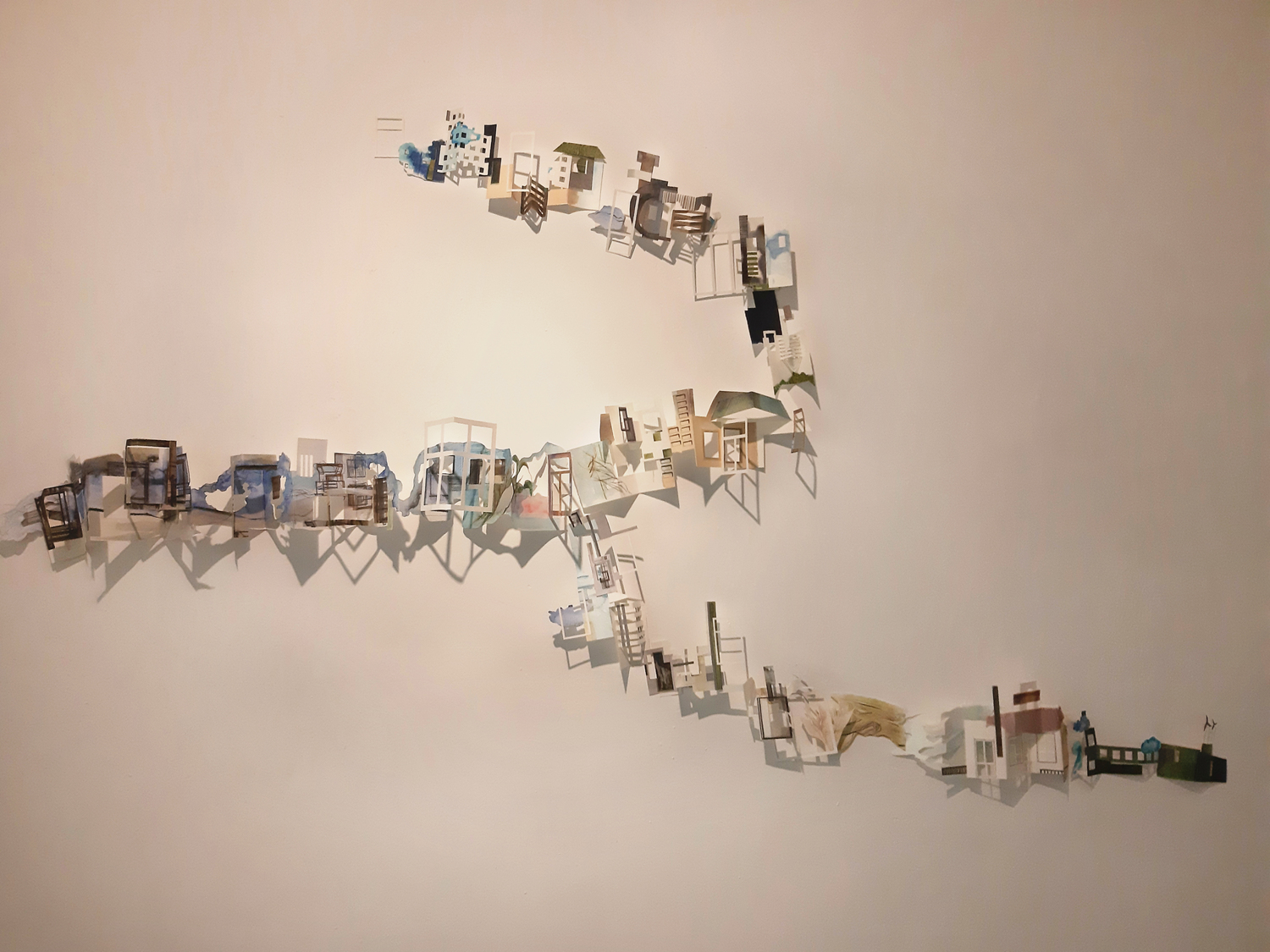
As the structure rises, new possibilities open. During the lockdown, when physical movement became restricted, paper became both constraint and opportunity. Sharma began making pop-up structures: flat surfaces that unfolded into small architectures in the reader's hands, a book that refused to stay a book, insisting on becoming three-dimensional space. Murals, however, continue to hold a particular force. To work on a wall is to traverse distance, to keep reaching in any and all directions, rather than being contained within an A4 sheet. It is phenomenological and philosophical at once, a reckoning with where she is in the city and who she is within it. For Sharma, who works through the body and the painted surface, the underlying conviction looks at the city as a protagonist. Works such as A Moment make this clear, capturing fleeting configurations of space that feel observed rather than composed, records of how a place shifts across time.
V. The Unfinished Roof
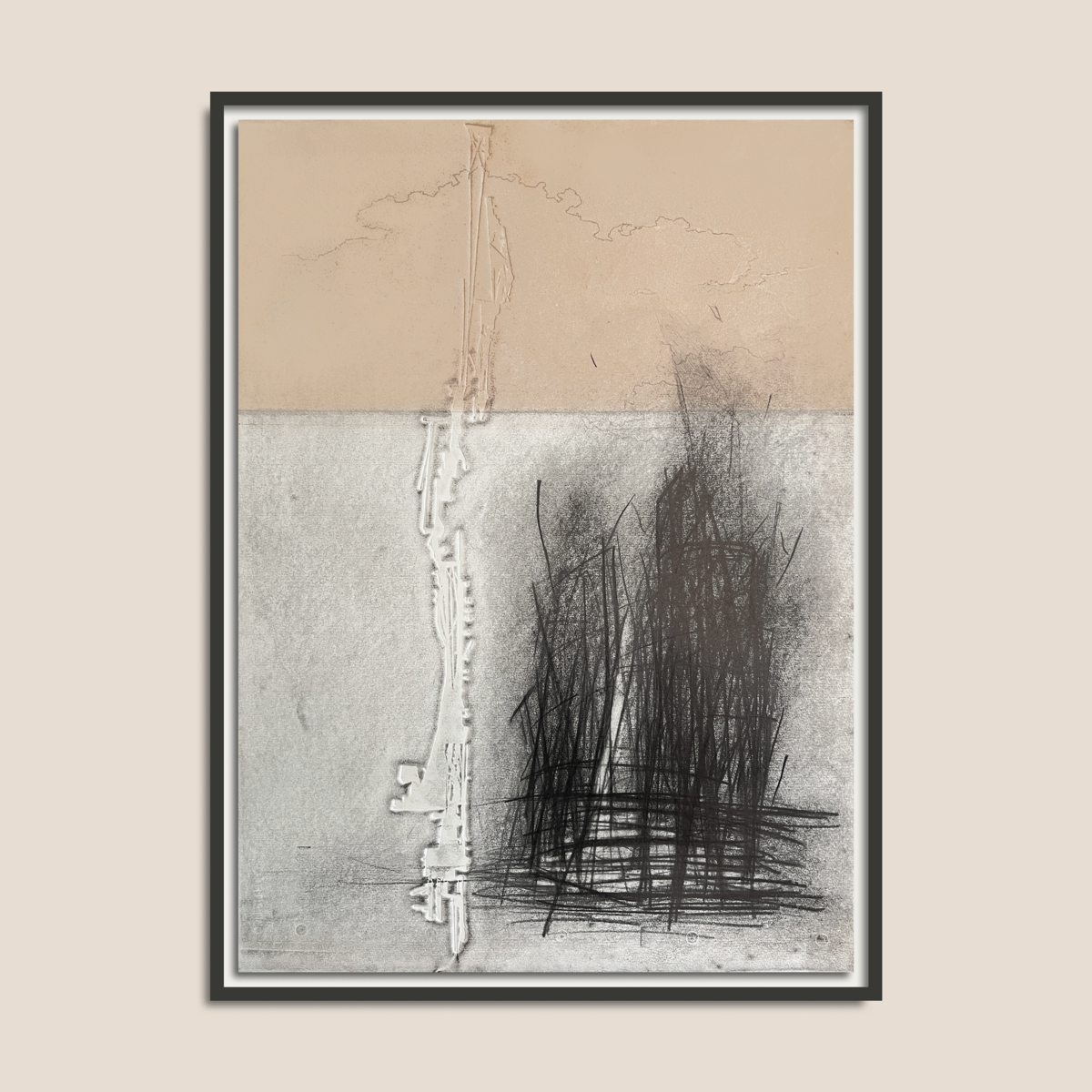
A building is never truly complete. Even when the structure stands, it continues to change, weathered by time, altered by use, inhabited in unforeseen ways. Sharma's current explorations gesture toward incorporating sound, temperature, and unglamorous ephemera that consistently escape representation. Memory of Dust makes this literal: collected studio dust becomes part of the visual field itself, a material that was always present, overlooked, now made to speak.
At its core, Parul Sharma's work is about access: who enters, who moves, who belongs. It is about the quiet, persistent act of noticing, of insisting on one's right to occupy space, to observe it, to push a line of pigment across it until it reaches somewhere it was not supposed to reach. Like a building still under construction, her practice continues to rise, layer by layer, line by line, in ongoing negotiation with the city that holds it, and with the woman moving through.
Explore more of Parul's work here.